
Base Cuts the Umbilical Cord From Optimism's OP Stack
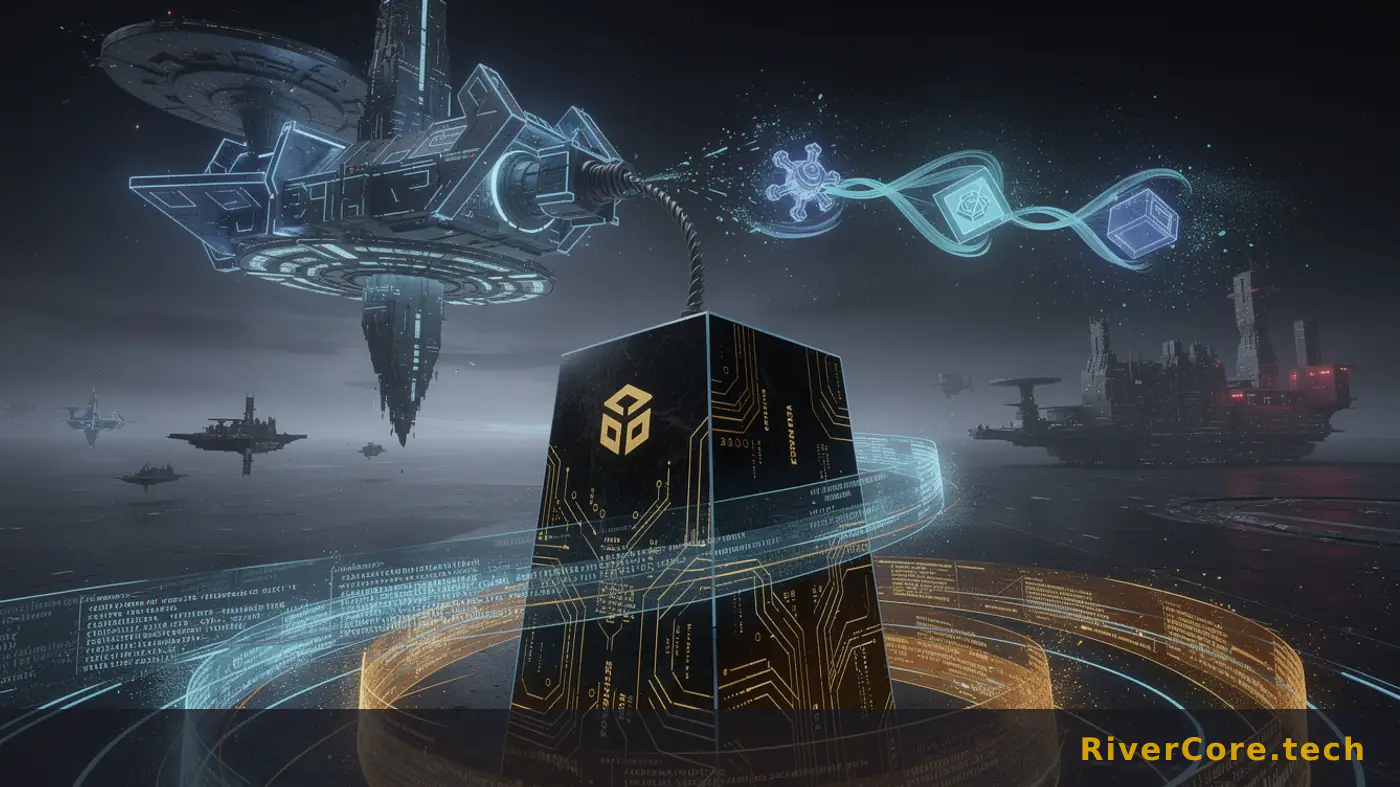
Think of the OP Stack the way you'd think of a shared power grid feeding a row of terraced houses. Everyone drew from the same substation, everyone paid into the same maintenance pool, and one house at the end of the street quietly used more electricity than everyone else combined. On Tuesday, that house announced it's building its own generator in the back garden.
Base, the Coinbase-backed Ethereum L2, is pulling its codebase into a Base-operated repo called base/base and stepping off Optimism's shared infrastructure. It's the sort of move that looks polite in the press release and rearranges an entire ecosystem in the codebase.
What Happened
On February 18, 2026, Base said it was consolidating its stack away from Optimism's OP Stack and into a repository it maintains itself, as Yellow.com reported. Since Base launched in August 2023, it has run on OP Stack components maintained by Optimism, Flashbots and approach across a scatter of repositories, including the sequencer.
The new stack, designated base/base, pulls those distributed pieces into one repo built on open-source components including Reth. Node operators are the ones who feel it first: they'll need to migrate off Optimism releases and onto Base's client software to stay compatible with future upgrades. Miss the memo, fall off the network.
Base is aiming to double its hard fork cadence from three per year to six. The Base Security Council is swapping out Optimism's seat for an independent signer. Under Vitalik Buterin's rollup classification, Base keeps its Stage 1 decentralization status through the shift.
The relationship isn't over so much as rewritten. Base will continue buying support from Optimism through the OP Enterprise program, will maintain compatibility with OP Stack specifications during the transition, and will keep supporting existing RPC endpoints, including the ones in the Optimism namespace. Optimism's official line: "Our focus remains on delivering enterprise-grade blockchain infrastructure to our ecosystem, and we will continue to serve Base as an OP Enterprise customer while they build out their independent infrastructure."
Markets read the subtext quickly. Optimism's OP token dropped 4% in the 24 hours after the announcement. Base sits on $3.85 billion in total value locked, which makes it comfortably the biggest chain in what used to be called the OP Stack Superchain.
Technical Anatomy
The guts of it: an OP Stack rollup is a Rube Goldberg of specialised repos. The execution client, the batcher, the proposer, the sequencer, the fault proof machinery, all live in separate places, versioned separately, coordinated via specs. It works, but only if a downstream chain accepts that its release train is set by someone else's maintainers.
Consolidating into base/base collapses that graph. One repo, one release process, one place where CI either goes green or it doesn't. The choice to build on Reth is telling: it's the modern Rust Ethereum execution client that's become the default answer whenever someone wants performance without waiting for upstream Geth decisions. Anyone who has tried to backport a critical patch across five repos maintained by three different orgs knows why a monorepo starts to look attractive at scale.
Going from three hard forks a year to six is the real declaration of intent. That cadence is only reasonable if you own your release engineering end to end. Coordinating a hard fork across the OP Stack Superchain means every chain agreeing on timing, testing, and rollback procedures. Base has decided it can't wait its turn anymore, especially with an ambitious roadmap: transitioning from optimistic proofs to TEE/ZK proofs in an upcoming hard fork, then implementing Ethereum's Fusaka and Glamsterdam upgrades in subsequent releases. Those aren't small diffs. TEE/ZK proof systems change the trust assumptions of the chain, and the Ethereum-level upgrades are non-negotiable timing pressure imposed by the EIP process.
The Security Council swap matters as much as the code. Replacing Optimism's signer with an independent one removes a governance thread that could, in theory, have delayed a Base-specific emergency action. If Base wants Stage 2 decentralization eventually, it needs a council whose composition is defensible on its own terms, not inherited from a partner chain.
Who Gets Burned
Optimism is the obvious short-term casualty, and the 4% OP drop reflects that. The OP Stack pitch to enterprise customers has always leaned on Base as the flagship reference deployment. "The biggest L2 on Ethereum runs on us" is a fantastic slide. "The biggest L2 on Ethereum runs on a fork we no longer control" is a different slide. The OP Enterprise revenue continues, which softens the P&L hit, but the narrative damage lands immediately.
Node operators are the ones staring at a migration ticket this quarter. Anyone running Base infrastructure inside an exchange, custody provider, indexer or bridge now has to test, stage and cut over to a new client without breaking uptime SLAs. The boring bit, in other words, where it all falls over if you don't have a proper canary process.
Other Superchain members are in an awkward spot. If the largest tenant leaves, the shared maintenance burden gets redistributed across smaller chains with thinner treasuries. Expect some of them to quietly explore whether they, too, want to fork their own stacks, and expect Optimism to fight hard to keep them by accelerating features that only make sense on a shared codebase.
Coinbase itself takes on real operational risk. Owning the stack means owning the bugs. There's no more "we're waiting for the upstream patch" excuse when something breaks at 3am. My take: this is the right trade for a chain sitting on $3.85 billion in TVL, but the first serious sequencer incident under the new regime will be tested against a much less forgiving audience.
Playbook for Crypto and DeFi
If you run infrastructure that touches Base, three things belong on this week's standup.
First, audit every Base RPC integration for hardcoded assumptions about the Optimism namespace. Base is preserving those endpoints during the transition, but "during the transition" is doing a lot of work in that sentence. Anything mission-critical should have a fallback path that doesn't assume OP-namespaced methods survive forever.
Second, if you operate nodes, get the base/base client into a staging environment now, not the week before the first mandatory hard fork. The doubled cadence means shorter windows to react. Build the muscle memory before it's an incident.
Third, DeFi teams with contracts deployed on Base should re-read their upgrade paths in light of the proof-system change. Moving from optimistic to TEE/ZK proofs isn't a cosmetic switch; it changes the finality guarantees your protocol depends on for withdrawal delays, bridge risk models, and MEV assumptions. If your risk parameters were tuned for a seven-day challenge window, model what they look like under faster finality.
For anyone building on other OP Stack chains, ask the uncomfortable question out loud: does your host chain have the engineering headcount to fork if it needs to? If the answer is no, factor that dependency into your architecture the way you'd factor in an oracle dependency from Chainlink. Shared infrastructure is a feature until it isn't.
Key Takeaways
- Base is consolidating into a single
base/baserepo built on Reth, ending direct reliance on OP Stack code maintained by Optimism, Flashbots and approach. - Hard fork cadence doubles from three to six per year, enabling a faster path to TEE/ZK proofs and Ethereum's Fusaka and Glamsterdam upgrades.
- Node operators must migrate from Optimism releases to Base's client software; Optimism namespace RPCs remain supported during the transition.
- OP token dropped 4% on the news; Optimism keeps Base as a paying OP Enterprise customer, softening but not erasing the strategic hit.
- The house at the end of the terrace built its own generator. The rest of the street now has to decide whether the shared grid still makes sense for them.
Frequently Asked Questions
Q: What does Base moving off the OP Stack actually mean for developers?
Contracts and tooling keep working in the near term because Base is maintaining OP Stack specification compatibility and existing RPC endpoints, including the Optimism namespace. The real change is upstream: node operators must switch to Base's client software, and hard forks will land twice as often, so integration and monitoring pipelines need tighter release discipline.
Q: Is Base still considered part of the Superchain?
Base is the largest chain in what was the OP Stack Superchain ecosystem, but its codebase is now maintained independently in the base/base repo. It continues to buy support from Optimism through the OP Enterprise program and maintains OP Stack compatibility during the transition, so the split is technical and governance-level rather than a hostile fork.
Q: Why is the move from optimistic to TEE/ZK proofs significant?
Optimistic rollups rely on a fraud-proof challenge window that delays finality, typically around seven days. Transitioning to TEE and ZK-based proofs changes the security model and can dramatically shorten withdrawal times, which affects bridge design, DeFi risk parameters, and MEV strategies built around the old assumptions.

SEC Crypto FAQ Tackles Buybacks, Upgrades, Profit Promises
The SEC quietly dropped a crypto FAQ covering token buybacks, network upgrades, and profit promises. Small document, big consequences for token designers.
Solana Outearns Ethereum on Fees, Loses on Burns
Solana pulled in $23.58M in fees to Ethereum's $12.04M over 30 days, yet Ethereum still burned more tokens. The plumbing tells you why the flip is harder than it looks.

IBM Bets Banks Won't Trust the Cloud With Tokenized Deposits
IBM plugged Digital Asset Haven into Swift's new shared ledger and shipped an on-prem version on IBM Z. The build-vs-buy math for bank digital asset stacks just shifted.