BIS Slams Dollar Stablecoins as ETFs in Disguise
Anyone who has wired USDC on a Sunday night to settle a position knows why stablecoins won. They clear when banks are asleep. On Monday, the Bank for International Settlements walked into a Tokyo seminar and told the world that convenience is hiding something that looks a lot more like a money market fund than a dollar.
BIS general manager Pablo Hernández de Cos used the Bank of Japan venue to call for tighter global coordination, and he did not sugarcoat the message. Dollar stablecoins, in his framing, could have "material consequences" for financial stability if they keep scaling. That is central-banker language for: we are going to regulate this.
What Happened
Speaking Monday in Tokyo, as TradingView reported, de Cos argued that current stablecoin arrangements fall short of what a widely used means of payment actually requires. He acknowledged the good parts: faster cross-border transfers, integration with smart contracts. Then he moved to the throat.
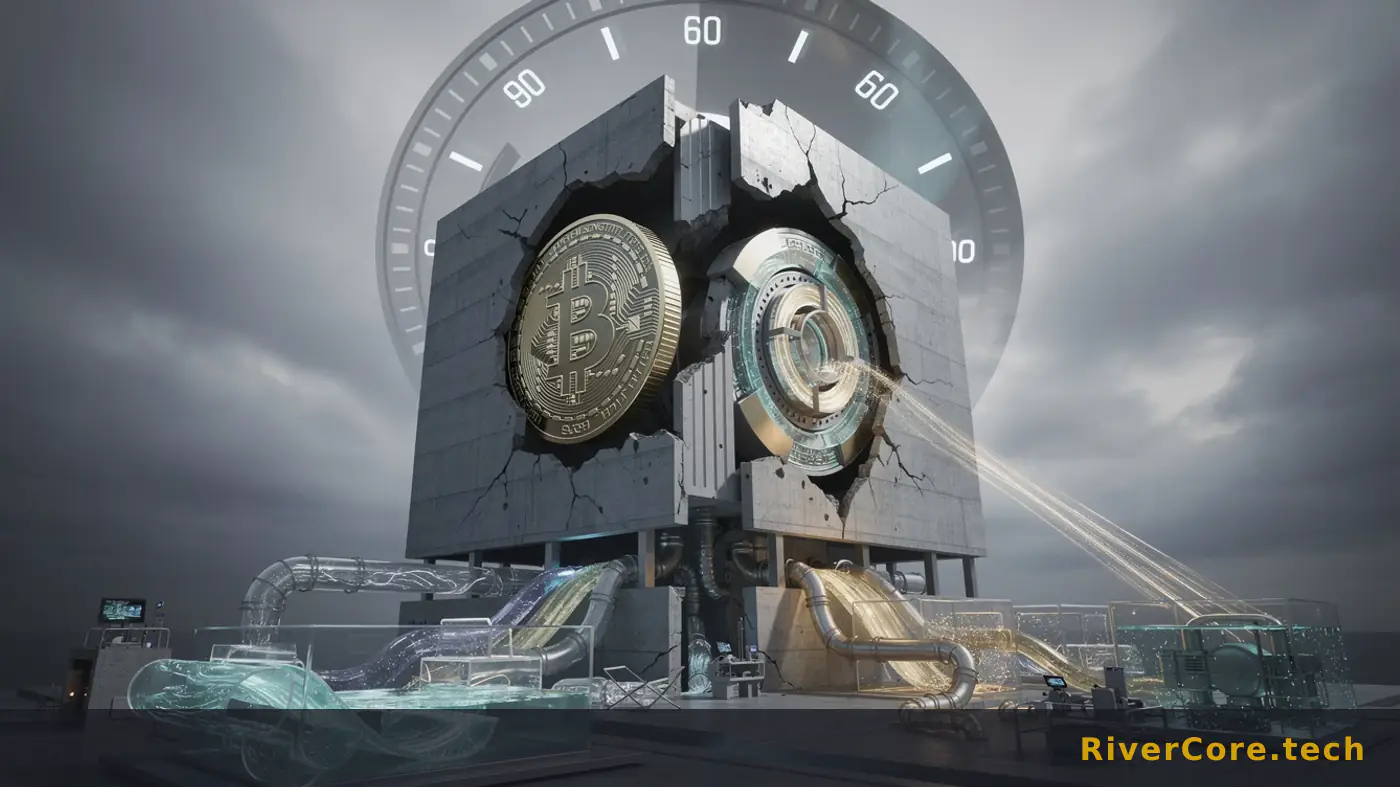
The largest dollar stablecoins, specifically USDT and USDC, share characteristics with investment products rather than cash-like money. His evidence list was specific: fees and conditions on primary market redemptions, and episodes where secondary market prices diverge from par. Put those together and the tokens behave more like exchange-traded funds than dollars. That is not a compliment from a central banker.
Because issuers hold short-term government debt and bank deposits as reserves, de Cos argued stablecoins still carry run and contagion risk. A rapid outflow event forces reserve sales into already strained markets, or transmits funding pressure to banks. He also flagged that public permissionless chains and unhosted wallets park a significant slice of activity outside conventional AML and CTF controls, making the tokens attractive for illicit use unless on- and off-ramps carry bespoke safeguards.
The speech did not land in a vacuum. Earlier this month, Bank of France First Deputy Governor Denis Beau urged the EU to go beyond the original MiCA text, limiting non-euro stablecoins in everyday payments and tightening rules on issuing the same coin inside and outside the bloc to close regulatory arbitrage. The European Central Bank has been contrasting euro stablecoins with tokenized money market funds, noting both perform liquidity transformation and carry run risk under different regimes. In March, UK House of Lords members grilled Coinbase on deposit drain, SVB-style runs and crime facilitation while the UK government finalizes its fiat-backed token regime. On April 8, UBS and Swiss domestic peers launched a franc-denominated stablecoin pilot in a sandbox.
Technical Anatomy
The ETF framing is the part engineers should read twice. It is not rhetorical. It is a legal and operational claim about how these instruments behave under stress, and it has concrete plumbing implications.
A cash-like instrument redeems at par, instantly, with no gatekeeping. A dollar in your bank account does not charge you a fee to become physical cash, and it does not trade at 99.2 cents on a bad Tuesday. Stablecoins do both. Primary market redemptions carry fees and minimums, which means the "peg" is really a wholesale arbitrage mechanism that only kicks in above certain ticket sizes. Retail holders experience the secondary price, and the secondary price wobbles. We have seen USDC trade meaningfully below par during the SVB weekend. That is ETF behavior, not deposit behavior.
The reserve side matters just as much. Issuers hold short-term Treasuries and bank deposits. In a fast outflow, the issuer has to dump Treasuries into a market that is probably already bid-less, or pull deposits from banks that are probably already thirsty. This is the exact transmission channel the BIS is naming. It is not hypothetical. It is the same liquidity transformation problem that made prime money market funds a 2008 accident waiting to happen.
The compliance surface is the third leg. When value moves through an unhosted wallet on a permissionless chain, the issuer sees a mint and a burn but not the twenty hops in between. That is fine until a regulator asks for travel-rule data that the protocol layer was never designed to produce. Smart contract composability, the thing that makes stablecoins useful in DeFi, is the same property that makes them hard to police. Teams building on top of EVM rails should assume that on- and off-ramp requirements will keep tightening, and that "the contract is permissionless" will stop being a sufficient answer to a regulator.
My take: the BIS is not trying to kill stablecoins. It is trying to force them to pick a lane. Either become narrow-bank money with boring reserves and instant par redemption, or get regulated like an ETF with prospectuses, gates and capital requirements. The current in-between is what central banks find unacceptable.
Who Gets Burned
Tether and Circle are the obvious names, but the blast radius is wider than the issuers. Any fintech or iGaming platform that has quietly rebuilt its treasury on USDC or USDT rails is now carrying regulatory beta it did not price in.
European operators are first in line. If Beau's push lands and non-euro stablecoins get restricted in everyday payments, any EU-facing product using USDC for settlement needs a euro fallback. MiCA already squeezes; a tighter version squeezes harder. Teams I have worked with on payment stacks treated MiCA as a one-time compliance project. It is not. It is a moving target, and the Bank of France just told you the direction.
DeFi protocols whose TVL is stablecoin-denominated carry a different flavor of risk. If issuers face redemption gates or fee hikes to look more ETF-like, the assumption that 1 USDC equals 1 dollar inside a lending market breaks in a visible way. Liquidation engines tuned to a hard peg will misfire. Teams running perpetuals, lending, or stablecoin-settled RWAs need to stress test for a 50 to 200 basis point depeg that lasts days, not minutes.
Banks themselves are the less obvious casualty. The BIS explicitly warned that stablecoin stress transmits funding pressure to banks holding issuer deposits. A mid-size bank discovering it is a concentrated counterparty to a stablecoin reserve is a 2am phone call nobody wants. Production incidents I have seen on the traditional side often start exactly this way: an exposure nobody mapped until it moved.
The uncomfortable read: Switzerland's franc pilot is the template regulators actually want. Bank-issued, sandbox-born, anchored in the regulated system. Everything else is going to be pushed toward that shape or pushed out.
Playbook for Crypto and DeFi
This week, not next quarter. The regulatory signal is loud enough to act on.
First, diversify stablecoin exposure at the treasury layer. If your platform settles in one issuer, you are carrying single-name credit risk plus single-name regulatory risk. Split between at least two issuers and model a scenario where one is gated for 72 hours. Run the numbers on your float, your payout obligations, and your hedge costs under that scenario.
Second, instrument your peg assumptions. Any smart contract that treats a stablecoin as exactly one dollar is a latent bug. Add oracle-based price checks at protocol entry and exit points. Chainlink feeds or equivalent should gate liquidations and redemptions during divergence windows. If your team shipped a lending market in 2022 that hardcodes par, this is the week to patch it.
Third, get ahead of the AML posture. On- and off-ramp safeguards are going to be the pressure point. Map every fiat touchpoint in your stack and document the controls. If you run a DEX aggregator or a wallet, assume unhosted-wallet scrutiny intensifies through 2026.
Fourth, start evaluating non-dollar rails seriously. The UBS-led Swiss pilot, MiCA-compliant euro stablecoins, and bank-issued tokens are not a sideshow anymore. Regional iGaming and fintech operators who can settle in the local regulated token will have a compliance moat over competitors still routing everything through USDT.
Fifth, do not bet the roadmap on a regulatory status quo. The BIS, ECB, Bank of France, and UK House of Lords are pointing at the same target. When that many central bankers agree, the rules change.
Key Takeaways
- BIS has formally reframed USDT and USDC as ETF-like instruments, citing redemption fees and secondary-market depegs. That framing drives regulation, not headlines.
- The transmission risk runs both ways: stablecoin stress can force Treasury fire sales and pull deposits from banks holding issuer reserves.
- European policy is converging fast. Non-euro stablecoins in everyday EU payments are the next restriction target, per the Bank of France.
- The Swiss franc pilot launched April 8 is the regulator-preferred shape: bank-issued, sandboxed, anchored in the regulated system.
- Action this week: diversify issuers, instrument peg assumptions in smart contracts, tighten on/off-ramp AML, and evaluate local-currency regulated tokens.
Frequently Asked Questions
Q: Why is the BIS comparing stablecoins to ETFs instead of dollars?
Because USDT and USDC carry redemption fees, minimums, and secondary-market price divergences from par. Cash does not do any of those things. Investment products do. The BIS is arguing the tokens behave structurally more like exchange-traded funds than like money.
Q: What does this mean for DeFi protocols that assume a hard peg?
It means the hard-peg assumption is a latent bug. Protocols should add oracle-gated price checks, model depeg scenarios lasting days rather than minutes, and stress-test liquidation engines against a 50 to 200 basis point divergence between a stablecoin and the dollar.
Q: Will non-dollar stablecoins replace USDT and USDC in regulated markets?
In Europe, possibly yes for everyday payments if Bank of France proposals advance. The Swiss franc pilot launched April 8 shows regulators prefer bank-issued, sandboxed tokens over offshore dollar stablecoins. Dollar stablecoins will likely remain dominant globally but face shrinking footprint in EU retail flows.