
BlackRock's BUIDL Lands on OKX as Idle Crypto Cash Gets a Job
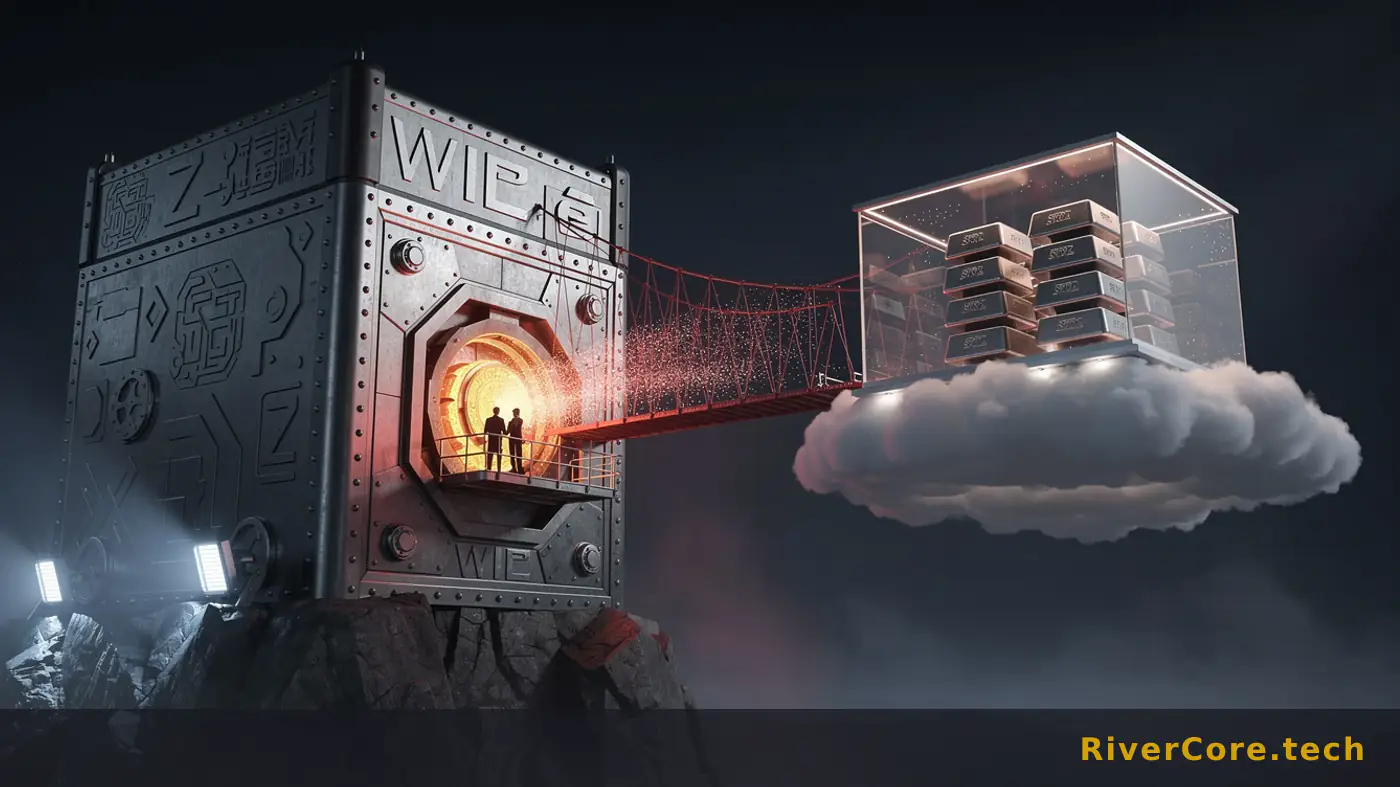
Picture the back room of an old merchant bank: ledgers on one side of the wall, the vault on the other, and a clerk whose entire job is making sure the gold in the vault matches the numbers in the book. That clerk is about to get a very strange new shift, because the gold is now a tokenized money market fund, the book is a crypto exchange, and the bank is Standard Chartered. BlackRock is moving its roughly $2.5 billion BUIDL fund onto OKX, and the clerk in the middle is the whole story.
The Numbers
Start with the headline figure. As Advisor Perspectives reported, BlackRock is bringing its roughly $2.5 billion BUIDL money market fund to OKX, with Standard Chartered holding the underlying assets in regulated custody. The fund itself, the BlackRock USD Institutional Digital Liquidity Fund, was launched in 2024, tokenized by Securitize, and is available to qualified investors only.
The mechanics are the bit worth lingering on. BUIDL invests in Treasuries and repurchase agreements, holds a stable $1 value, and now appears as available collateral on OKX while the actual assets sit at Standard Chartered. Traders post BUIDL as margin, and it keeps earning interest. Anyone who has watched billions of dollars of USDT sit on an exchange earning the trader precisely nothing knows what a structural shift that is.
Zoom out and the context gets sharper. The real-world assets space, per RWA.xyz, has grown to around $30 billion, up some 400% since the start of 2025. That's still a rounding error against BlackRock's broader book, but the growth curve is the kind investors notice. And the cast list reads like a Davos seating chart: BlackRock as the world's largest asset manager, Standard Chartered as the global custodian, and OKX backed by Intercontinental Exchange, the owner of the New York Stock Exchange.
This isn't the first dance. Standard Chartered and OKX launched a similar collateral mirroring program with Franklin Templeton back in April 2025. So the plumbing has been tested for a year before BlackRock walked in carrying the bigger bag. Access for now is limited to investors in the Middle East, with Rifad Mahasneh, CEO of OKX MENA and CIS, fronting the rollout.
The framing from Mahasneh is telling. "This product was designed to minimize risk rather than add the layers of risk," he said. "It becomes more efficient collateral and productive collateral." Translation: this is yield-bearing margin, dressed in a custody arrangement a compliance officer can sign off on without reaching for the antacids.
What's Actually New
The headlines will say "BlackRock goes deeper into crypto." That's not the interesting bit. The interesting bit is the optionality on custody.
Per the announcement, BUIDL can now be used as collateral on OKX in two ways for the first time: off-exchange, with assets held at Standard Chartered for certain clients, or directly on-exchange as yield-bearing collateral for margin trading. Mahasneh put it cleanly: "Some of our clients prefer to keep custody in a custodian such as Standard Chartered. Some of our clients prefer to keep custody within OKX. For us, it is an agnostic question. The novel idea is that you can still generate yield on that custody in both cases."
That custody-agnostic split is the part the engineering crowd should care about. For years the implicit deal on a centralized exchange was: hand us your assets, accept counterparty risk, get liquidity. The off-exchange settlement model that grew out of the post-FTX panic flipped that, but at the cost of capital efficiency. Now the clerk in the back room is reconciling collateral state across two custody locations and letting the trader treat them as fungible margin. That's a non-trivial bit of accounting infrastructure to get right, and it's the part where it all falls over if oracle pricing or attestation lags.
The other genuinely new thing: BlackRock is no longer flirting. Larry Fink has said repeatedly, including in his latest annual letter to investors, that every financial asset will eventually be tokenized. You can dismiss that as CEO-speak, but BUIDL sitting on an OKX margin engine is the receipts. The fund isn't a research project anymore, it's a working piece of crypto exchange plumbing.
And the choice of venue matters. OKX is backed by ICE, the company that owns the NYSE. The optics of "crypto exchange" stop being quite so spicy when the cap table looks like that.
What's Priced In for Crypto and DeFi
If you've been watching the RWA category, none of this is shocking. The $30 billion figure from RWA.xyz, the 400% growth since the start of 2025, the steady drip of Treasury-backed tokens replacing stablecoin idle cash: the trajectory was visible. The market expected BlackRock to keep pushing BUIDL into more venues. The Franklin Templeton precedent with the same Standard Chartered/OKX rails told you the template existed.
What was less priced in, in my view, is how cleanly the custody-agnostic model maps onto institutional desk requirements. Most DeFi protocols still treat collateral as a single-location problem: it's in the vault or it isn't. The BUIDL/OKX/Standard Chartered setup says collateral can live in two places at once for accounting purposes, with a bank carrying the legal weight. That's a model that doesn't translate easily to permissionless DeFi, and it should make protocol designers think hard about whether the next wave of institutional flow ever touches their smart contracts at all, or just routes around them through regulated mirrors.
The other thing the market is underweighting: the regulatory backdrop. The IMF warned in April 2026 that moving trading infrastructure onto blockchain-based systems could accelerate financial crises beyond regulators' ability to respond. That warning didn't stop this deal. It probably won't stop the next one either, but it puts a ceiling on how loudly anyone in Washington can cheer. Engineering teams building tokenized collateral rails should assume the SEC and equivalents will eventually want hooks into the attestation layer. Worth keeping an eye on the SEC's rule pipeline as this matures.
Contrarian View
The bullish read is that this is the moment Wall Street infrastructure and crypto markets converge for real. The contrarian read is that BUIDL on OKX is a Middle East product, gated to qualified investors, with the actual assets sitting at a global bank. Strip away the tokenization layer and you have a prime brokerage arrangement with extra steps.
That's not nothing, but it's also not the open, programmable financial system the tokenization evangelists have been selling for a decade. The "blockchain" part of this story does very little work. The custody is at Standard Chartered. The fund is BlackRock's. The exchange is centralized and ICE-backed. The token is a permissioned representation issued by Securitize. If the rails went back to being a SQL database tomorrow, would anyone in the institutional flow notice?
I'd argue the honest description of what's happening here is: tokenization is winning as a settlement format and losing as an ideology. That's a fine outcome for BlackRock and OKX. It's a more awkward outcome for protocols that staked their pitch on disintermediation.
Key Takeaways
- BlackRock's $2.5 billion BUIDL fund is now usable as yield-bearing margin on OKX, with Standard Chartered holding the underlying Treasuries and repos in regulated custody.
- The custody-agnostic design, off-exchange at Standard Chartered or on-exchange at OKX, is the genuinely novel piece, and the harder engineering problem to get right.
- The RWA category is around $30 billion per RWA.xyz, up roughly 400% since the start of 2025, and BUIDL's expansion is a cause as much as a symptom.
- Access is limited to Middle East qualified investors for now, which keeps regulatory exposure narrow while the plumbing gets stress-tested.
- The IMF's April 2026 warning about blockchain-based trading infrastructure is a reminder that the regulatory ceiling on this model hasn't been tested at scale.
Back to the clerk in the merchant bank. The job hasn't really changed. The ledger is faster, the vault is in two places at once, and the customers can borrow against the gold while it's still earning interest. But somebody still has to reconcile it at the end of the day, and somebody still has to be liable when the numbers don't match. BlackRock found that somebody, and it turns out to be a 160-year-old bank.
Frequently Asked Questions
Q: What is BUIDL and why does it matter for crypto exchanges?
BUIDL is BlackRock's tokenized money market fund, launched in 2024 and tokenized by Securitize, that invests in Treasuries and repurchase agreements while holding a stable $1 value. It matters because traders can now post it as collateral on OKX and continue earning interest, instead of letting margin cash sit idle.
Q: How does the Standard Chartered custody arrangement work?
BUIDL tokens sit in regulated custody at Standard Chartered while showing up as available collateral on OKX. Clients can choose to keep custody at the bank off-exchange or directly on-exchange as yield-bearing margin, with the same yield generation in both cases.
Q: Who can access this product today?
Access is currently limited to qualified investors in the Middle East, per OKX's regional CEO Rifad Mahasneh. The structure builds on a similar collateral mirroring program that Standard Chartered and OKX launched with Franklin Templeton in April 2025.