
CrowdStrike Brings CDR to Google Cloud at Next 2026
Picture a railway signalling room in the 1950s. Three lines come into the station, but only two have live telemetry on the board. The third line's trains exist, they run on time, they carry passengers, but the dispatcher finds out what happened on it the next morning from a stack of paper logs. That was, roughly, the shape of CrowdStrike's cloud coverage until this week. The third line just got wired up.
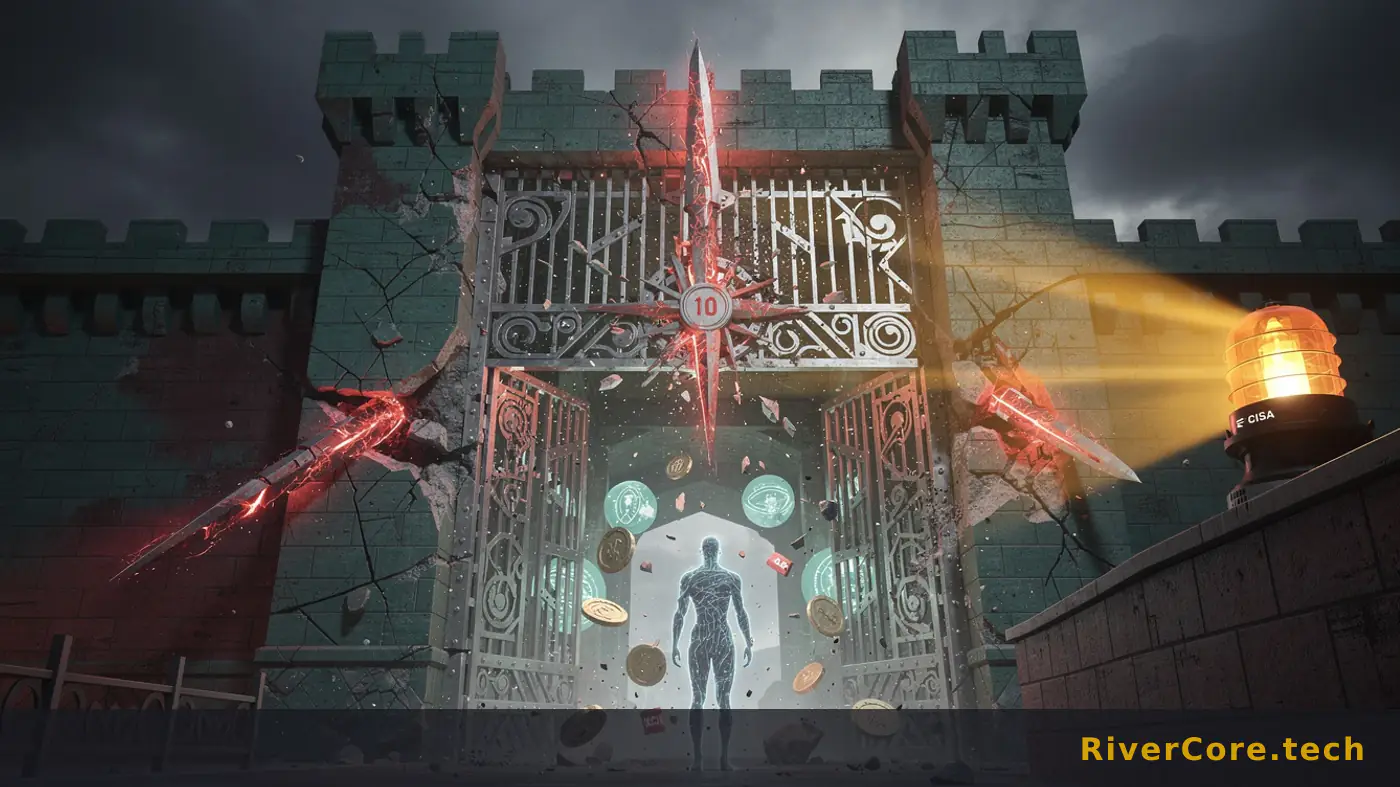
At Google Cloud Next 2026, CrowdStrike announced that its Cloud Detection and Response (CDR) service now covers Google Cloud Platform alongside the AWS and Azure support it already shipped. The pitch: real-time runtime protection for Google workloads, sold as a counter to attackers using AI to move through cloud estates faster than defenders can blink.
What Happened
On April 23, as SC Media reported, CrowdStrike Holdings brought its CDR service to Google Cloud Platform, closing what has been a conspicuous gap in the Falcon Cloud Security platform. CDR had been running on AWS and Azure for some time. Google Cloud, despite being the third leg of the hyperscaler stool and the preferred home of a lot of ML and data engineering shops, was sitting outside the real-time monitoring tent.
The announcement landed at Google Cloud Next 2026, which is about as on-the-nose as vendor choreography gets. Two headline points matter. First, GCP is now integrated alongside AWS and Azure into CDR's real-time monitoring. Second, CrowdStrike extended the Falcon platform to regional Google Cloud infrastructure, which is the quiet detail that compliance leads in Europe and the Gulf will care about more than the marketing.
The framing from CrowdStrike is explicit: attackers are using AI to speed up intrusions and lateral movement in cloud environments, and batch log processing (the traditional approach) can't keep up. CDR's answer is event streaming, AI and machine learning to correlate adversary activity with cloud asset and identity context, and automated response actions tied into that correlation.
For anyone who has watched a noisy GuardDuty feed light up at 2am and tried to piece together which IAM role did what in which project, the idea of a single pane across all three clouds is not a small thing. It's the signalling room with all three lines finally on the board.
Technical Anatomy
The guts of it come down to telemetry model. Traditional cloud security tools, including most CSPM and CNAPP offerings, lean heavily on batch log processing: ingest CloudTrail, ingest Cloud Audit Logs, chew through them on a schedule, surface findings. That works for posture and compliance reporting. It falls over the moment an attacker moves faster than your ingest lag.
CDR's bet is event streaming. Activity in the cloud control plane and runtime gets analysed immediately rather than at the end of a batch window. Pair that with a sensor model that already lives on workloads through Falcon, and you get a story where process-level telemetry and control-plane events can be correlated in something close to real time.
The AI and ML layer is doing adversary-to-context correlation. That's the boring bit that actually matters. A suspicious API call on its own is noise. The same call tied to a specific service account, a specific compute resource, a specific identity chain, and a known TTP from MITRE ATT&CK is a detection. Volume of signals is not the problem in cloud security; joining them without drowning the analyst is. That's what the correlation layer is supposed to earn its keep doing.
The regional Google Cloud infrastructure piece is the part most press releases gloss over. Falcon running on regional GCP infrastructure means the data plane for the security tool itself stays within a given jurisdiction. For customers under GDPR, Schrems II follow-ons, UAE data residency rules, or Australian government workloads, that's the difference between "we can buy this" and "legal vetoed it in Q2". Anyone who has tried to get a US-headquartered SaaS security tool approved by a German works council knows exactly how much friction this removes.
Automated response actions are the final link. Detections that only page a human at 3am aren't defence, they're notifications. Tying correlation output to actions (isolating a workload, revoking a token, killing a process) is where event streaming pays for itself. Whether those actions are wired up conservatively or aggressively is going to be the configuration debate inside every adopting team.
Who Gets Burned
The obvious loser is any pure-play cloud-native security vendor whose main differentiator was "we cover all three clouds and the agent folks don't". That moat just got a lot shallower. Wiz, Orca, Sysdig, Lacework-descended products: they still have real technical arguments, but "CrowdStrike doesn't do GCP properly" is no longer one of them.
The less obvious loser is the in-house SOC that has been stitching together GuardDuty, Defender for Cloud, and Security Command Center with a pile of Python and a prayer. That architecture works. It's also expensive in headcount and brittle when people leave. A consolidated CDR story changes the internal business case for keeping that home-grown pipeline alive, particularly at mid-market shops where the security team is six people and two of them are on-call this week.
Verticals with heavy GCP footprints feel this most. iGaming operators who picked GCP for BigQuery and real-time analytics around player behaviour now have a serious runtime option on the same cloud. Fintechs running fraud models on Vertex AI and card-flow services on GKE have been asking for exactly this shape of coverage. Ad-tech platforms pushing petabytes through GCP pipelines have historically underinvested in runtime cloud detection because the tooling was weaker there. That excuse just expired.
The next 90 days for security leads in those verticals look roughly like this: a procurement conversation about whether to consolidate onto Falcon Cloud Security, a painful internal debate about agent footprint on GKE nodes, and a quiet re-evaluation of whatever CNAPP contract is up for renewal. Expect some aggressive discounting from incumbents trying to hold the line. Expect CrowdStrike's account teams to be unusually cheerful through Q2.
Playbook for Security Teams
If GCP is in your estate and CrowdStrike is already on your endpoints, this week's job is small and specific. Get the CDR GCP coverage into a proof of value against your top three detection gaps. Not a bake-off. A targeted test: can it see a service account token abuse chain end-to-end, can it correlate a compromised workload identity to control-plane activity, can it trigger an automated containment without a human in the loop.
Map your current GCP detection coverage against ATT&CK for Cloud techniques before the vendor demo, not after. You want to walk in knowing which cloud TTPs you currently miss or catch late. Otherwise you will be sold the features the vendor wants to show, not the ones you need.
For teams under data residency pressure, pin down exactly which GCP regions the Falcon regional infrastructure covers and get it in writing. "Regional" is a spectrum. Frankfurt is not Dammam is not Sydney. Your DPO will ask, and the answer needs to be specific.
Finally, resist the urge to turn on aggressive auto-response on day one. Event streaming plus AI correlation plus automated action is a powerful combination and a fantastic way to take your own production down if the tuning is off. Run it in observe mode, build confidence in the detections, then graduate specific playbooks to automated containment. The railway analogy holds: you don't hand the new signalling system full authority over the switches until you've watched it call a few hundred trains correctly.
Key Takeaways
- CrowdStrike CDR now covers Google Cloud alongside AWS and Azure, closing a real gap in the Falcon Cloud Security platform.
- The architectural bet is event streaming and AI correlation against adversaries moving faster than batch log pipelines can keep up with.
- Falcon on regional GCP infrastructure is the quiet win for data residency-constrained customers in Europe, the Gulf, and APAC.
- Pure-play cloud-native security vendors lose their "CrowdStrike doesn't do GCP" talking point overnight.
- Adopters should pilot against specific detection gaps, verify regional coverage in writing, and keep auto-response in observe mode before handing over the switches.
Frequently Asked Questions
Q: What exactly did CrowdStrike announce at Google Cloud Next 2026?
CrowdStrike expanded its Cloud Detection and Response service to Google Cloud Platform, integrating GCP alongside AWS and Azure in CDR's real-time monitoring. It also extended the Falcon platform to regional Google Cloud infrastructure for customers with data residency requirements.
Q: How is CrowdStrike CDR different from traditional cloud security tools?
Traditional tools rely on batch log processing, which analyses cloud activity on a delay. CDR uses event streaming for immediate analysis, combined with AI and machine learning that correlate adversary activity with cloud asset and identity context, and can trigger automated response actions.
Q: Why does regional Google Cloud infrastructure support matter?
It means the Falcon platform can run within specific jurisdictions, which is important for customers subject to strict data residency laws such as GDPR-driven requirements in the EU or sovereign data rules elsewhere. Without regional coverage, procurement and legal teams often block adoption regardless of the tool's technical merits.