
Freshworks Cuts 11% as AI Reshapes SaaS Engineering
Picture a working watermill on an Irish river. For two centuries it ground flour with a dozen hands on the wheel, the sluice, the sacks. Then steam arrived, then electricity, and one by one those hands found themselves outside looking in at a building that did the same job with a switch on the wall. Freshworks just flipped a switch.
The headline is plain enough: an 11% workforce reduction at a mid-cap SaaS vendor, framed explicitly as an AI-driven restructuring. The interesting bit, the bit worth chewing on if you run an engineering org, is what kind of mill the company thinks it's becoming.
Key Details
As Let's Data Science reported, Freshworks is cutting roughly 11% of its workforce, with the move framed around AI reshaping how software gets built and sold. That's the spine of the story. Anything beyond that headline I'm going to treat as analysis rather than fact, because it should be.
Freshworks sits in a familiar bracket: a customer-experience and ITSM vendor competing with the heavyweights, running the usual SaaS playbook of land-and-expand, mid-market focus, and a steady stream of feature releases. The kind of company where, until recently, the org chart looked like a layered cake. Frontline support engineers at the base, Tier 2 and 3 above them, product engineering, SRE, then platform, then the small priesthood of ML folks off to one side.
An 11% cut is not a panic move. It's not 25%. It's the size of reduction you make when you've looked at a spreadsheet, identified specific functions whose marginal output has dropped relative to tooling, and decided the cheapest fix is fewer people doing the same volume with better software. The boring bit is that this is what discipline looks like at a public SaaS company in 2026.
What we don't have, and I won't invent, is a department-by-department breakdown. The pattern across the sector this past year has been heavier cuts in support, QA, technical writing, and Tier 1 customer-facing engineering, lighter cuts in core platform and infra. Whether Freshworks follows that pattern exactly is something earnings calls and LinkedIn will reveal over the next quarter. The shape of the cut matters more than the number.
Why This Matters for Engineering Teams
Anyone who has run a 24/7 on-call rotation knows the dirty secret of SaaS support: most tickets are not novel. They're password resets, permission misconfigurations, integration auth failures, and the same five questions about webhook retries. Generative AI, fine-tuned on a company's own runbooks and ticket history, eats that volume for breakfast. The mill grinds the easy grain.
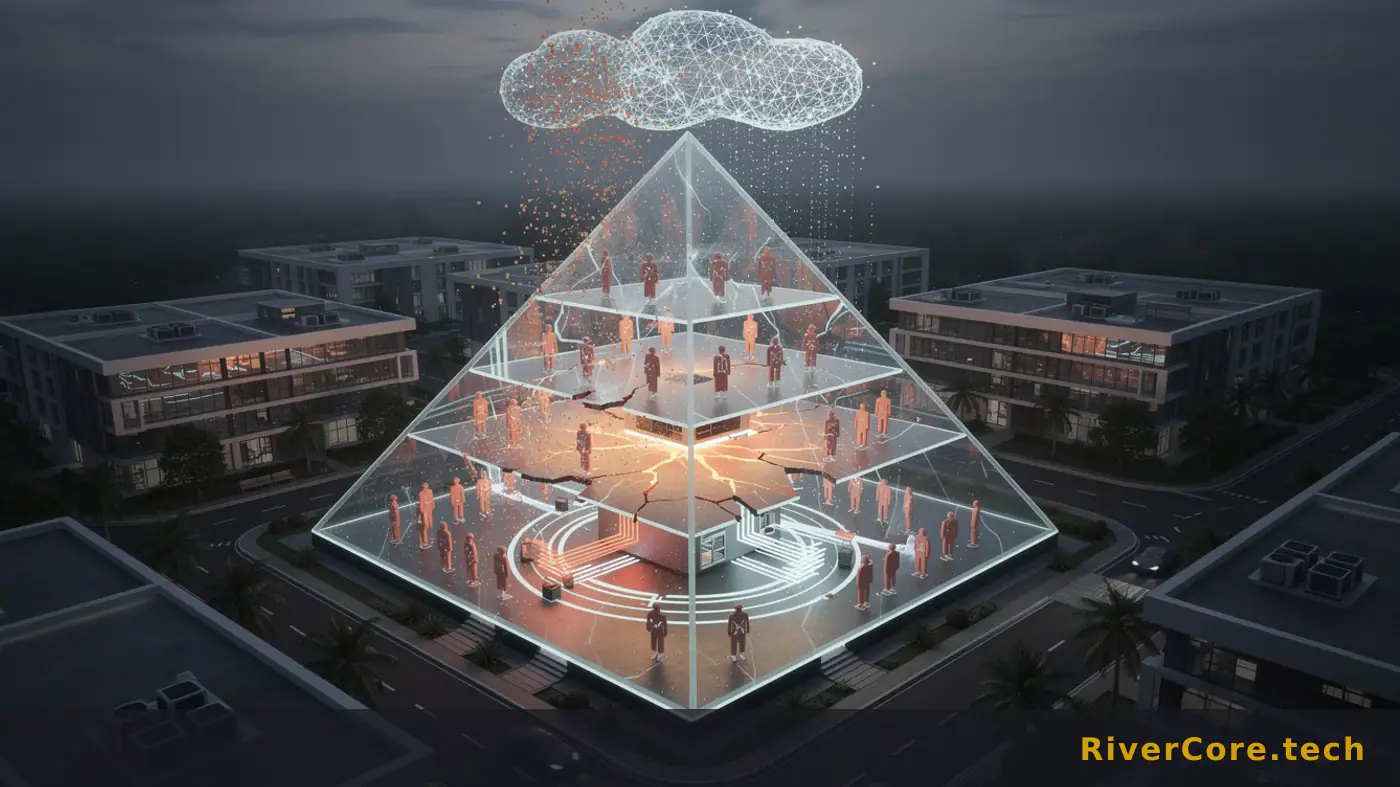
The harder grain, root-cause analysis on a partition split, debugging a leaky connection pool at 3am, designing a multi-tenant rate limiter that doesn't punish the well-behaved, that still needs hands. My read is that the Freshworks cut, and the wave it sits inside, is fundamentally a reshaping of the bottom of the pyramid, not the top. Junior and mid-level roles whose work was already templated are the ones absorbing the hit.
This has consequences engineering leaders are going to feel within 18 months. Where do senior engineers come from? They come from junior engineers who learned the craft by handling the templated work first. If you automate away the apprenticeship, you've optimised this year's P&L by mortgaging the next decade's senior bench. I don't see a clean answer to that yet, and the companies pretending they have one are usually selling something.
The other practical shift: the AI tooling itself becomes a production system. That means observability for prompts, evals as part of CI, version control for fine-tuned models, rollback plans when an LLM regression starts hallucinating refund policies at customers. Teams that treated their OpenTelemetry setup as a tickbox are now discovering that tracing an LLM-mediated support flow, where a model called a tool that called an API that called a database, requires every span to carry context the original instrumentation never anticipated.
Industry Impact
For the iGaming and fintech crowd reading this, the Freshworks story is a useful tea-leaf rather than a direct read-across. Regulated verticals can't replace human-in-the-loop as aggressively. A KYC review or an AML escalation has audit and liability characteristics that an LLM doesn't satisfy on its own. But the support tier, the integration help desk, the merchant onboarding queue, those are absolutely on the table, and the SaaS vendors selling into those verticals are now competing with each other on cost-to-serve, not just feature velocity.
The second-order effect is on procurement. If your CRM or ITSM vendor just cut 11%, your account manager is probably new, your renewal contact is definitely new, and the roadmap commitments you got six months ago need re-verifying. Engineering teams that depend on Freshworks-class tooling for incident management, customer comms, or internal IT need to ask the awkward question: which features are now maintained by a half-staffed team, and which got the AI rewrite that introduces new failure modes?
There's also a platform-level question that nobody at the vendor end wants to answer cleanly. When a SaaS company replaces support engineers with an AI layer, the SLA implicitly changes. Response times improve on the easy stuff, degrade on the hard stuff, and the variance widens. For ad-tech and fintech buyers running mission-critical workflows, that variance is the part where it all falls over. P50 latency looks great in the marketing deck. P99 is where contracts get torn up.
What to Watch
Three signals are worth tracking over the next two quarters. First, hiring patterns at Freshworks and its peers. If the cuts are followed by aggressive hiring in ML platform, applied AI, and senior infrastructure roles, this is a genuine restructuring. If hiring stays flat across the board, it's just a margin play wearing AI fancy dress.
Second, the gross margin line on the next two earnings calls. SaaS companies have been stuck around 75-80% gross margin for years. The AI thesis says you can push higher because support cost-to-serve drops. The counter-thesis says inference costs eat the savings. Watch the number, not the narrative.
Third, watch the customer-facing failure modes. Public Reddit and Hacker News threads from buyers will tell you, faster than any vendor blog, whether the AI replacements are holding up under real load. The mill either grinds clean flour or it doesn't, and the customers are the ones eating the bread.
My prediction, for what it's worth: the 11% number will look conservative within 18 months. Not because Freshworks is in trouble, but because the pattern is going to repeat across the mid-cap SaaS bracket, and the second wave will be larger than the first as the tooling matures and the boards get bolder. The watermill became a power station. The power station ran with three engineers and a dashboard. Software is on the same trajectory, and the only real question is which roles end up holding the dashboard.
Key Takeaways
- Freshworks' 11% cut is being framed as AI restructuring, and the size and framing matter as much as the number itself.
- The most exposed roles are templated support, QA, and Tier 1 engineering, where LLM-fine-tuned tooling now handles the bulk of repeat volume.
- Automating the apprenticeship pipeline creates a senior-engineer drought 18-24 months out that nobody has a clean answer for.
- AI in production demands real observability, evals, and rollback discipline, not bolt-on prompt engineering.
- Buyers of SaaS tooling should re-verify roadmap commitments and watch P99 behaviour, not just headline response-time improvements.
Frequently Asked Questions
Q: Why is Freshworks cutting 11% of its workforce?
The cut is being framed as a response to AI reshaping how software is built, sold, and supported. In practical terms it reflects automation of templated work in support, QA, and frontline engineering, where generative AI tooling has reduced the marginal need for human headcount.
Q: Should engineering leaders expect similar layoffs at other SaaS vendors?
Yes, the pattern is likely to repeat across the mid-cap SaaS bracket as AI tooling matures and boards push for margin expansion. The Freshworks cut sits inside a wider trend rather than being a one-off, and the second wave is likely to be larger than the first.
Q: What should buyers of SaaS tools do in response to AI-driven vendor restructuring?
Re-verify roadmap commitments, identify which features are maintained by reduced teams, and pay close attention to P99 latency and failure modes rather than headline metrics. Variance in service quality typically widens after AI-driven restructuring, and that variance is where production incidents originate.

PostgreSQL 19 Ships Without SQL/PGQ: The Right Call
PostgreSQL 19 drops SQL/PGQ over unresolved bugs but ships REPACK CONCURRENTLY, ending the midnight VACUUM FULL pager. Here's what platform teams should plan for.

Treasury Sanctions BitBank as Iran's Bitcoin Pipeline Grows
OFAC designated Iranian exchange BitBank under Operation Economic Outcast, targeting a bitcoin laundering pipeline active since June. The technical problem: BTC can't be frozen.

Dutch Regulator Renews Eight iGaming Licenses to 2031
The KSA has renewed eight Dutch online gambling licenses through 2031, including Bet365 and Holland Casino, even as self-exclusion failures resurface.