
KelpDAO's $293M Hack Exposes DeFi's Real Attack Surface
Any platform lead with a cross-chain bridge in production should be walking into their next architecture review with one question on the agenda: how many independent validators sit between the protocol's bridge contract and a withdrawal? If the honest answer is one, the next 90 days of engineering spend just got reprioritized. The KelpDAO exploit is the kind of incident that reshapes vendor selection and hiring plans, not just incident response runbooks.
The headline number is $293 million. The more important number, for anyone making a build-vs-buy call on bridge infrastructure this quarter, is one. As in 1-of-1.
What Happened
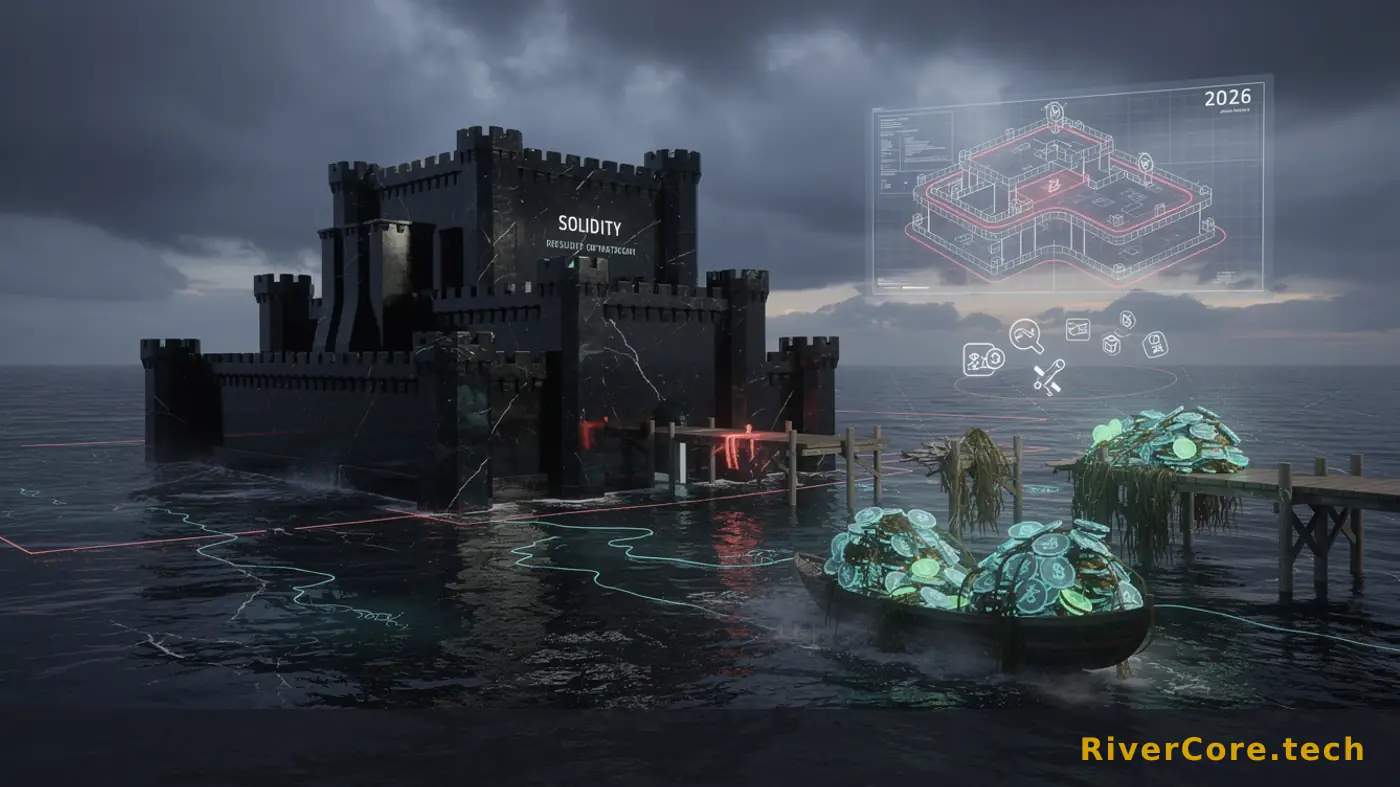
On April 18, 2026, attackers walked away with 116,500 rsETH from KelpDAO, worth roughly $290 to $293 million depending on which intraday print you mark against. As Crypto Briefing reported, the exploit did not target a single line of smart contract code. There was no reentrancy bug, no rounding error in a yield calculation, no signature malleability. The Solidity, as far as anyone can tell, held up.
What broke was the operational plumbing. The attackers compromised KelpDAO's internal RPC nodes through a technique now being called RPC poisoning, and used those compromised nodes to feed the protocol's bridge a fabricated burn event that never actually happened on-chain. The bridge, trusting its data source, released 116,500 rsETH to the attackers' addresses. A DDoS attack ran in parallel, which observers believe either served as misdirection for the security team or actively forced traffic onto compromised fallback infrastructure.
The critical structural flaw was a 1-of-1 verification setup. A single point of confirmation stood between the protocol and catastrophic loss, and the attackers found it.
Attribution, as is increasingly common with nine-figure crypto thefts, points to North Korea's Lazarus Group, specifically the TraderTraitor sub-group, based on infrastructure patterns resembling previous DPRK-linked operations. The aftershock was severe: DeFi protocols across the ecosystem halted rsETH transactions, and an estimated $10 to $13 billion in total value locked drained out of DeFi as users fled protocols sharing similar architectural assumptions. It is the largest DeFi hack of 2026.
Technical Anatomy
To understand why this matters for the next three years of DeFi architecture, you have to understand what an RPC node actually is in this context. It's the read layer. When a bridge contract on Chain B needs to know whether a corresponding burn event happened on Chain A, it doesn't psychically observe the other chain. It asks an RPC node. If that node lies, and nothing else cross-checks the answer, the bridge mints or releases assets against a transaction that never existed.
This is the design assumption Lazarus monetized. The Ethereum tooling stack, well-documented across ethereum.org, treats RPC endpoints as trusted infrastructure by convention, not by cryptographic enforcement. Most teams running self-hosted Geth or Erigon nodes assume the bigger threat is downtime, not adversarial data injection from inside their own perimeter. KelpDAO learned otherwise.
The DDoS layer is what elevates this from clever to professional. Forcing a system onto degraded fallback paths is a classic playbook from traditional financial infrastructure attacks, and seeing it ported cleanly into DeFi tells you the threat actors are no longer crypto-native opportunists. They are state-aligned operators applying mature TTPs to immature operational stacks.
The fix space is well-understood, even if implementation is expensive. Multi-source verification via oracle networks (Chainlink's CCIP architecture, documented at docs.chain.link, is the most obvious commercial option), N-of-M attestation across independently operated validator sets, ZK light clients that verify state transitions cryptographically rather than via trusted RPCs. All of these exist. None of them are free. Each adds latency, integration cost, and vendor dependency to a stack most DeFi teams optimized for capital efficiency and time-to-market, not adversarial robustness.
That trade-off is the actual story. KelpDAO did not have a 1-of-1 setup because the engineering team was lazy. They had it because, until April 18, the cost of a 5-of-7 attestation scheme looked indefensible relative to perceived risk.
Who Gets Burned
Three categories of operator are now exposed in ways their boards do not yet fully understand.
First, every liquid restaking protocol with a similar bridge topology. The $10 to $13 billion TVL exodus was not because users believed every protocol had identical flaws. It was because users could not tell from the outside which protocols had 1-of-1 architectures and which didn't. Opacity becomes contagion. Heads of Platform at peer protocols are now in the unenviable position of having to publicly document their verification architecture, which means inviting scrutiny they may not survive, or staying quiet and watching TVL bleed.
Second, the bridge-as-a-service vendors. Anyone selling a "white-label cross-chain layer" with self-hosted RPC dependencies is about to face procurement questionnaires that did not exist in March. Expect RFPs to start demanding signed attestations from multiple independent infrastructure providers, slashing conditions for validator misbehavior, and incident response SLAs measured in minutes.
The General Counsel at any DeFi protocol holding institutional capital should be asking their CTO this week whether the protocol's published security documentation matches its actual deployed architecture, and whether any disclosure obligations were triggered by the rsETH halt. If the protocol froze user funds in response to the exploit, even temporarily, there is a real question about contractual obligations to LPs and integrating venues. That conversation is more urgent than any code audit.
Third, the hiring market for DeFi security engineers shifts hard. The premium has been on Solidity auditors and formal verification specialists. The new scarce skill is the security engineer who understands RPC infrastructure, validator set design, oracle economics, and DDoS resilience as a single integrated discipline. That person currently works at a CEX or a high-frequency shop, not a DeFi protocol, and they are about to get expensive.
Playbook for Crypto and DeFi
For teams running bridges or restaking protocols, three actions belong on this quarter's roadmap.
Audit the verification topology end to end. Not the Solidity. The actual data flow from external chain event to internal state mutation. Every RPC dependency, every fallback path, every assumption about who has signing authority on what. Write it down. If any single component, human, key, or node can unilaterally trigger asset release, you have a 1-of-1 setup regardless of what your whitepaper claims.
Price the migration to N-of-M attestation honestly. Operating five independent validator nodes with geographically distributed key management costs real money, somewhere in the high six figures annually once you include SRE coverage. That cost should be modeled against a percentage of TVL at risk, and the answer should appear on the CFO's desk with a clear ask. The unit economics of self-insurance against operational compromise are now legible in a way they weren't 30 days ago.
For protocols integrating other people's bridges, demand attestation transparency before renewing any integration. If a vendor cannot produce a current architecture diagram showing independent verification paths, treat that as a leading indicator and route liquidity elsewhere. Procurement use is highest right now, while the KelpDAO loss is still fresh in vendor sales conversations.
Finally, fund the hire. One senior infrastructure security engineer with a TradFi or exchange background, embedded in the platform team, is the highest-ROI headcount any DeFi protocol can add in 2026. The market has not fully priced this role yet. It will by Q4.
Key Takeaways
- The $293 million KelpDAO loss came from compromised RPC nodes and a 1-of-1 verification setup, not a smart contract bug. Audit budgets allocated entirely to Solidity review are now structurally underweight on the real attack surface.
- A $10 to $13 billion TVL exodus across DeFi shows architectural contagion: users fled any protocol that might share the same operational assumptions, not just KelpDAO itself.
- Lazarus Group's TraderTraitor sub-group is now running TradFi-grade combined operations (RPC poisoning plus DDoS) against DeFi targets. Threat modeling needs to assume state-level capability, not lone-wolf exploitation.
- Platform leads should treat any 1-of-1 verification path as a critical finding this quarter and price out multi-validator attestation against TVL at risk before the next board meeting.
- The scarce 2026 hire in DeFi is not a Solidity auditor. It's an infrastructure security engineer who treats RPC, oracles, and DDoS resilience as one problem.
Teams evaluating their bridge architecture should now be asking themselves a sharper version of the old question. Not "have we been audited," but "what is the smallest number of independent failures required to drain this contract," and whether the honest answer would survive a Monday morning disclosure call.
Frequently Asked Questions
Q: What is RPC poisoning and why is it dangerous for DeFi bridges?
RPC poisoning is the technique of compromising the remote procedure call nodes a protocol uses to read data from a blockchain, then feeding it false information. It's dangerous because most DeFi bridges trust their RPC endpoints implicitly, so a lie about a burn or lock event can trigger real asset release on the other side with no on-chain bug required.
Q: Why did $10 to $13 billion leave DeFi after the KelpDAO hack?
Users could not easily tell from the outside which other protocols shared KelpDAO's 1-of-1 verification architecture, so they pulled funds from any protocol with similar structural patterns. The outflow was a confidence event driven by architectural opacity across the ecosystem, not by confirmed vulnerabilities in other specific protocols.
Q: How can a DeFi protocol move away from a 1-of-1 verification setup?
Options include N-of-M attestation across independently operated validator nodes, integrating multi-source oracle networks like Chainlink CCIP for cross-chain messaging, or implementing ZK light clients that verify state transitions cryptographically. Each adds cost and latency, so the right choice depends on TVL at risk, throughput requirements, and the team's appetite for vendor dependency versus self-hosted complexity.