
Uniswap Puts Compliance Inside The Pool: What Permissioned Pools Mean
The decision landing on platform leads' desks this quarter is whether to keep building bespoke compliance rails for tokenized securities, or to rent them from a decentralized exchange that just moved the KYC gate inside the liquidity pool. Uniswap's Thursday rollout of Permissioned Pools changes that math. For anyone budgeting a 6-to-8-figure RWA venue build in the back half of 2026, the ground shifted this week.
This is not a cosmetic feature drop. It is Uniswap Labs positioning the v4 hook architecture as the default settlement layer for regulated tokenized assets, and it lands with three launch partners who bring the actual paper: Securitize, Superstate, and Dowgo. If you run platform at a broker-dealer, a tokenization startup, or a licensed exchange, your architecture review just got a new agenda item.
What Happened
On Thursday, July 23, 2026, Uniswap Labs rolled out Permissioned Pools, a framework built on top of Uniswap v4 that lets issuers of tokenized funds, equities, and other regulated assets restrict trading to approved wallets while still using the protocol's automated market maker. As CoinDesk reported, the framework was developed with Superstate, Securitize (ticker SECZ), and Dowgo, a European digital securities platform.
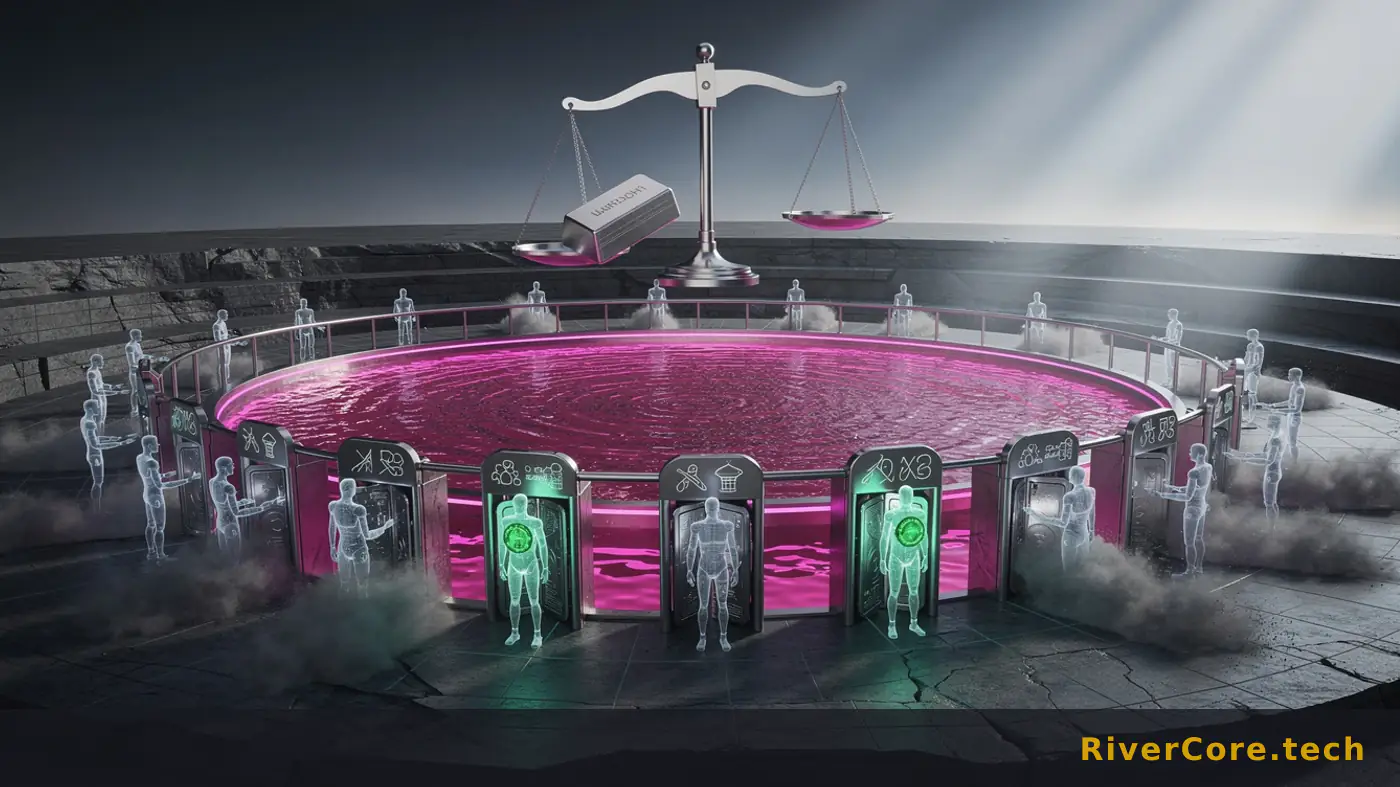
The mechanic is simple to describe and interesting to operate. Before a trade or liquidity deposit can occur, the pool verifies whether a wallet has been approved by the asset issuer. Approved wallets get AMM access. Everyone else gets rejected at the pool level, not at some upstream front-end.
Ken Ng, head of ecosystem at Uniswap Labs, framed the pitch bluntly: the feature "gives issuers a flexible way to enforce their own compliance rules without building separate trading infrastructure." Ng also called this "the next generation of value coming onchain, and it's trading on Uniswap." That is a positioning statement, not a product description.
The context matters. In February, BlackRock's tokenized money market fund BUIDL, issued by Securitize, became tradable on Uniswap, and BlackRock disclosed an investment in UNI itself. The protocol has also picked up activity from Robinhood's new chain and from tokenized stock trading. Meanwhile, Aave, the largest decentralized lender, launched Horizon, an institutional lending venue for tokenized assets. Citi projects tokenized securities reaching a $5.5 trillion market by 2030. The venues are racing to be the plumbing.
Technical Anatomy
The engineering choice worth understanding is where the compliance check sits. Superstate CEO Robert Leshner put it precisely: "Until now, compliance for tokenized securities lived at the app layer; a gate standing in front of the market. Permissioned Pools move those rules into the pool itself, so a regulated asset can tap real AMM liquidity without the issuer giving up the controls securities law requires." He called it "the piece of plumbing tokenization has been missing."
Translate that into architecture terms. Traditional tokenized-security venues put an allow-list check in the front end, or wrap a permissioned token contract around an ERC-20. Both approaches fragment liquidity. Every venue rebuilds the gate, every issuer maintains a bespoke integration, and the AMM curve on any given pair is thin because approved-investor pools cannot share liquidity with the open market without leaking. That is the problem Uniswap v4's hook system was designed to attack. Hooks let a pool run custom logic at defined lifecycle points, including before swap and before liquidity provision, which is exactly where an eligibility check belongs. The token standards stay untouched, the enforcement moves down the stack.
For a platform team, the consequence is that the issuer keeps the allow-list as authoritative state, the pool queries it atomically at trade time, and the AMM math runs unchanged for whoever passes. You get one liquidity pool, one price curve, one settlement path, and per-issuer policy without forking the exchange. That is a very different cost curve than maintaining your own matching engine, your own order book, and your own KYC-gated wallet registry.
The trade-off is real. You inherit Uniswap's smart contract risk, its governance surface, and its upgrade cadence. You also inherit UNI as a stakeholder in your compliance path, which is not a neutral fact when BlackRock is on the cap table. And the allow-list itself becomes a piece of onchain infrastructure that regulators, auditors, and your General Counsel will all want to inspect. Whoever writes to that list has enormous power over secondary market access.
Who Gets Burned
The most exposed teams are the ones that spent the last eighteen months building proprietary tokenized-security matching engines and pitching them as moats. If a v4 hook plus an issuer allow-list gets you 80% of the compliance story with a fraction of the headcount, the build case collapses. The CFO at any Series B tokenization startup should be asking their VP Engineering this week what the true incremental value of the in-house trading venue is, versus routing to Permissioned Pools and putting that engineering budget into origination, custody, or issuer relationships. If the honest answer is "we thought we were an exchange, but we might be a compliance layer," that is a strategy conversation, not a roadmap conversation.
Licensed brokerages sit in a stranger position. Their moat has historically been the regulated wrapper around order flow. If AMM liquidity for tokenized equities lives on Uniswap and the eligibility check is enforced onchain, the brokerage's role shrinks toward onboarding, tax reporting, and custody. Those are still real businesses, but they are lower-margin than execution.
Traditional venues, including the institutional players, feel this too. LMAX exploring a sale or IPO, and B2C2 holding sale talks with multiple buyers, both signal that mid-tier institutional crypto infrastructure is consolidating. When one of the largest DEXs offers regulated-asset rails as a public good, the private alternatives lose pricing power. Meanwhile, Poolin filing for bankruptcy is a reminder that infrastructure businesses without a defensible moat get commoditized fast, even when they were once dominant.
Aave benefits by contrast. Horizon and Permissioned Pools together sketch a full institutional DeFi stack: permissioned lending on one side, permissioned AMM trading on the other, both using the same wallet-level eligibility primitives. That is a coherent story for a tokenized fund treasurer in a way that piecing together five vendors never was.
Playbook for Crypto and DeFi
If you are a platform lead at a tokenization issuer, run the integration spike now. Not a full migration, a spike. Stand up a test pool with a dummy allow-list, measure gas costs, measure how the eligibility check behaves under contention, and put a real number on operational overhead versus your current venue arrangement. That number is what you take to the board.
If you run engineering at a DeFi protocol targeting institutions, the interesting question is composability. Does your protocol accept LP positions from Permissioned Pools? Can a tokenized T-bill wrapped in an approved wallet be used as collateral in your lending market without breaking the eligibility chain? The teams that answer yes first become the natural stack for RWA-native DeFi.
The General Counsel at any regulated issuer should be asking their Head of Platform this week who controls the allow-list write path in production, how it is audited, and what the disaster recovery plan looks like if that key is compromised. Compliance enforcement moving onchain is a huge operational win, and also a new single point of regulatory failure. Both things are true.
For hiring, this shifts demand. Solidity engineers with v4 hook experience, wallet-registry backend engineers, and compliance-ops people who can read a smart contract are all going to get more expensive over the next two quarters. Budget accordingly.
Key Takeaways
- Uniswap v4 hooks now serve as regulated-asset infrastructure, not just a DEX feature. That reframes the build-vs-buy decision for any tokenization venue.
- The launch partners (Securitize, Superstate, Dowgo) plus prior BUIDL integration signal that BlackRock-tier issuers see Uniswap as a settlement layer, not a retail venue.
- Proprietary tokenized-security matching engines lose their strongest moat. Expect consolidation among mid-tier institutional platforms, echoing LMAX and B2C2's current M&A posture.
- Allow-list governance becomes the new attack surface. Whoever writes eligibility state controls secondary market access, and that role needs the same rigor as any critical key management system.
- Teams evaluating an RWA venue build in Q3 should now be asking whether their differentiation is execution, or origination and compliance. If it is not execution, the AMM problem is already solved.
Frequently Asked Questions
Q: What are Uniswap's Permissioned Pools and how do they differ from regular v4 pools?
Permissioned Pools are a Uniswap v4 framework where the pool verifies whether a wallet has been approved by the asset issuer before allowing a trade or liquidity deposit. Regular v4 pools are open to any wallet. The difference is that compliance enforcement now lives inside the pool contract rather than at a front-end or wrapper-token layer.
Q: Which partners launched with Permissioned Pools?
Uniswap Labs developed the framework with Securitize (ticker SECZ), Superstate, and Dowgo, a European digital securities platform. All three plan to use it for regulated onchain assets, and Securitize is already the issuer of BlackRock's BUIDL fund, which became tradable on Uniswap in February 2026.
Q: Does this make Uniswap a regulated exchange?
Not directly. The protocol itself remains permissionless, but individual pools can now enforce issuer-defined eligibility rules onchain. That lets regulated securities trade through Uniswap's AMM while the issuer, not the protocol, holds the compliance obligation. The regulatory perimeter sits with the issuer and the allow-list operator, not with the AMM math.

SEC Crypto FAQ Tackles Buybacks, Upgrades, Profit Promises
The SEC quietly dropped a crypto FAQ covering token buybacks, network upgrades, and profit promises. Small document, big consequences for token designers.

Solana Outearns Ethereum on Fees, Loses on Burns
Solana pulled in $23.58M in fees to Ethereum's $12.04M over 30 days, yet Ethereum still burned more tokens. The plumbing tells you why the flip is harder than it looks.

IBM Bets Banks Won't Trust the Cloud With Tokenized Deposits
IBM plugged Digital Asset Haven into Swift's new shared ledger and shipped an on-prem version on IBM Z. The build-vs-buy math for bank digital asset stacks just shifted.