Veeam v13.1 Bets On Post-Quantum And AI Agents For Backup
Anyone who has run a 2am restore drill knows the real enemy isn't the ransomware, it's the seven consoles you have to log into before you can answer "is workload X protected?". Veeam's pitch at VeeamON 2026 in New York is aimed squarely at that pain. The vendor previewed Data Platform v13.1 and a new DataAI Resilience Module inside its DataAI Command Platform, both due in early Q3 2026.
What Happened
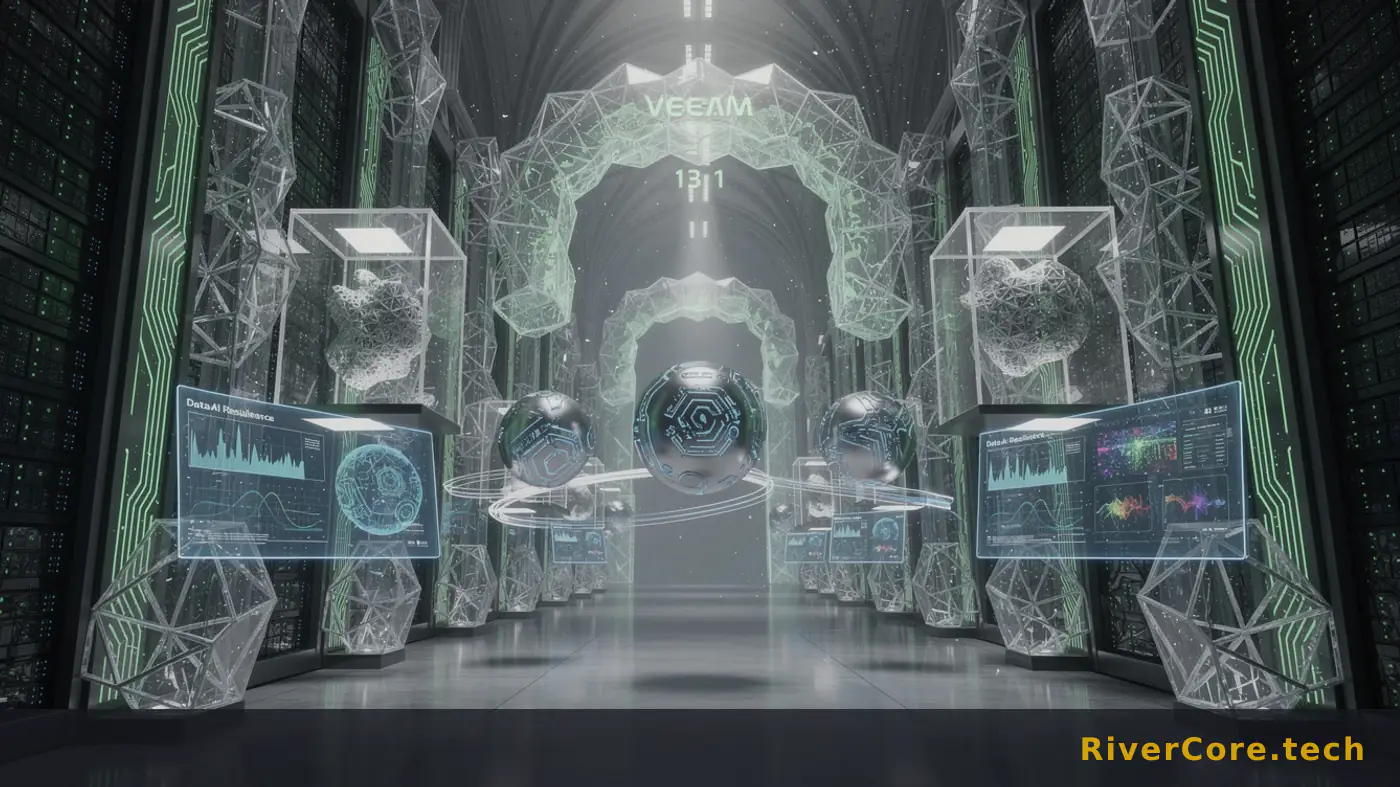
At VeeamON 2026 in New York City, Veeam, now branding itself "the Data and AI Trust Company," pulled the cover off two products. The first is Veeam Data Platform v13.1, which the company says ships with more than 70 new features and enhancements. The second is the DataAI Resilience Module, a management layer inside the DataAI Command Platform, as Business Wire reported from the event.
The headline technical bullets on v13.1 are portable protection across more hypervisors (with an OpenShift Virtualization spotlight), Active Directory Forest Recovery for identity resilience, post-quantum cryptography, NAS archive with lower-cost long-term retention and reduced storage rates, and expanded threat detection scanning that now covers AWS, Azure, NAS, and Microsoft 365. Hybrid FIPS and post-quantum encryption are also in the box.
The DataAI Resilience Module is the more interesting strategic move. Veeam describes it as "the first step towards a single experience" across its portfolio, powered by something called the DataAI Command Graph. It promises a single pane of glass, Global Search and Inventory across workloads, and built-in AI Agents that take natural language commands for log troubleshooting, ticket management, and predictive capacity planning.
Rehan Jalil, President of Products and Technology at Veeam, framed the rationale bluntly: "Fragmented data tools from security to governance and operations reduce visibility, add overhead, and leave unseen gaps." Both products land in early Q3 2026 through Veeam's partner network. Veeam claims more than 550,000 customers globally and protection of 82% of the Fortune 500.
Technical Anatomy
Strip away the marketing and v13.1 is doing three engineering jobs at once.
First, hypervisor portability. The OpenShift Virtualization spotlight is the tell. Enterprises ripping out VMware after the Broadcom price hikes need a backup layer that doesn't care what KVM-based platform they land on next. Veeam is positioning v13.1 as the abstraction that survives the migration. Production incidents I've seen during hypervisor swaps almost always trace back to backup agents that assumed too much about the underlying stack. A portable protection layer is table stakes now, not a differentiator.
Second, identity recovery. Active Directory Forest Recovery is in the release notes for a reason. When ransomware crews hit, they go for AD first because owning identity means owning everything downstream. Teams I've worked with have rebuilt forests by hand from documentation that was three years stale. Faster, scripted forest recovery turns a multi-day outage into something closer to a long afternoon.
Third, post-quantum cryptography and Hybrid FIPS. This is forward defense against "harvest now, decrypt later" attacks where adversaries grab encrypted backups today and wait for a quantum break. For regulated verticals, fintech, healthcare, government, the compliance teams will start asking about PQC roadmaps in 2026 procurement cycles. Veeam is getting ahead of that question.
The DataAI Resilience Module is a different animal. It's a control plane, not a data plane. The Command Graph implies a knowledge graph of workloads, policies, and recovery state, which is what makes "is workload X protected?" answerable as a single query instead of a Jira ticket. The AI Agents layered on top, natural language troubleshooting, automated tickets, predictive capacity planning, are essentially LLM-driven runbooks against that graph. Useful, if the graph is accurate. Worse than useless if it drifts.
My take: the Command Graph is the actual product. The agents are the demo. If Veeam keeps that graph current across hybrid estates, this matters. If not, it's another dashboard.
Who Gets Burned
Three groups should be watching this closely.
Point-tool vendors selling single-purpose ransomware detection or AD recovery are now staring at a unified bundle from a vendor that already protects 82% of the Fortune 500. That distribution moat is brutal. When the incumbent ships "good enough" inside the renewal, the standalone tool has to justify a separate line item against a CFO who just saw "reduced storage rates" in the Veeam quote. Two engineers' worth of budget on a 10-person platform team is the kind of number that wins those conversations fast.
Platform leads running multi-hypervisor estates are in the opposite seat. They've been told for a decade that consolidation simplifies operations, and now the migrations off VMware are forcing the opposite. v13.1's portability story is aimed at them. The uncomfortable read: if your DR runbook still hardcodes hypervisor-specific recovery steps, you're already behind. Re-platforming without a portable protection layer is how staging-green migrations melt in production.
Data and analytics teams with backup data sitting in cheap object storage need to rethink the value of that archive. NAS archive plus lower-cost long-term retention means cold backup tiers are becoming queryable resilience assets, not just compliance ballast. That changes the conversation with the warehouse team. Backup data on a Snowflake external stage or a ClickHouse cold tier for forensic analytics is a real pattern, and v13.1's economics make it cheaper to keep around.
SecOps teams get the most immediate lift. Threat detection scanning across AWS, Azure, NAS, and M365 in one pane is what they've been duct-taping together with custom scripts for years. The catch: any AI-agent layer that auto-creates tickets needs guardrails on day one, or you'll drown in noise.
Playbook for Data Teams
If you're a platform lead or CTO sitting in front of a Veeam renewal in the next two quarters, here's the short list.
Pin down what "early Q3 2026" means for your contract. GA in early Q3 is marketing-speak for "sometime between July and September." Do not commit to v13.1-dependent recovery SLOs until you've seen the bits in your own lab. Production incidents I've seen during point-zero-one upgrades almost always come from edge-case workloads that vendor QA didn't cover.
Audit your AD recovery runbook this month. Whether you adopt Veeam's forest recovery feature or not, the fact that it's now a marketed capability means your board will ask. Have a one-page answer ready: RTO for full forest rebuild, who owns it, last tested date.
Pilot the DataAI Resilience Module on a non-critical environment before you wire it into production alerts. AI agents writing tickets and predicting capacity sound great in a keynote. In practice, you want six weeks of shadow-mode output before any agent action touches a real workflow.
Negotiate on storage rates. Veeam explicitly called out reduced storage rates and lower-cost long-term retention. That's a renewal lever. Bring usage data to the table.
Finally, ask the post-quantum question in your next procurement cycle. Even if you don't need it yet, vendors who can't answer it are signaling a roadmap problem.
Key Takeaways
- Veeam Data Platform v13.1 ships 70+ features in early Q3 2026, with post-quantum crypto, AD Forest Recovery, and hypervisor portability as the headliners.
- The DataAI Resilience Module is a control-plane play, betting the Command Graph becomes the unified inventory for hybrid data estates.
- Point-tool vendors in ransomware detection and identity recovery face direct bundle pressure across 82% of the Fortune 500.
- Reduced storage rates and NAS archive open the door to treating backup tiers as queryable analytics assets, not just compliance cost.
- Do not trust GA dates blindly. Pilot the AI Agents in shadow mode and audit your AD recovery runbook before any renewal signature.
Frequently Asked Questions
Q: When will Veeam Data Platform v13.1 and the DataAI Resilience Module be available?
Both are scheduled for general availability in early Q3 2026, distributed through Veeam's global network of authorized partners, resellers, and distributors. Veeam previewed both at VeeamON 2026 in New York City.
Q: What is the DataAI Resilience Module and how does it differ from Veeam Data Platform?
The DataAI Resilience Module is a management layer inside the Veeam DataAI Command Platform, powered by the DataAI Command Graph. It provides a single pane of glass, global search across workloads, and AI Agents for natural language troubleshooting and predictive capacity planning, while Veeam Data Platform remains the underlying protection and recovery engine.
Q: Why does post-quantum cryptography matter for backup software now?
Backups are a prime target for "harvest now, decrypt later" attacks, where adversaries collect encrypted data today and wait for quantum decryption capabilities. Adding post-quantum cryptography and Hybrid FIPS support in v13.1 lets regulated industries answer procurement and audit questions about long-horizon data confidentiality.