Work Panel: The Vishing SaaS Turning Helpdesks Into Breach Vectors
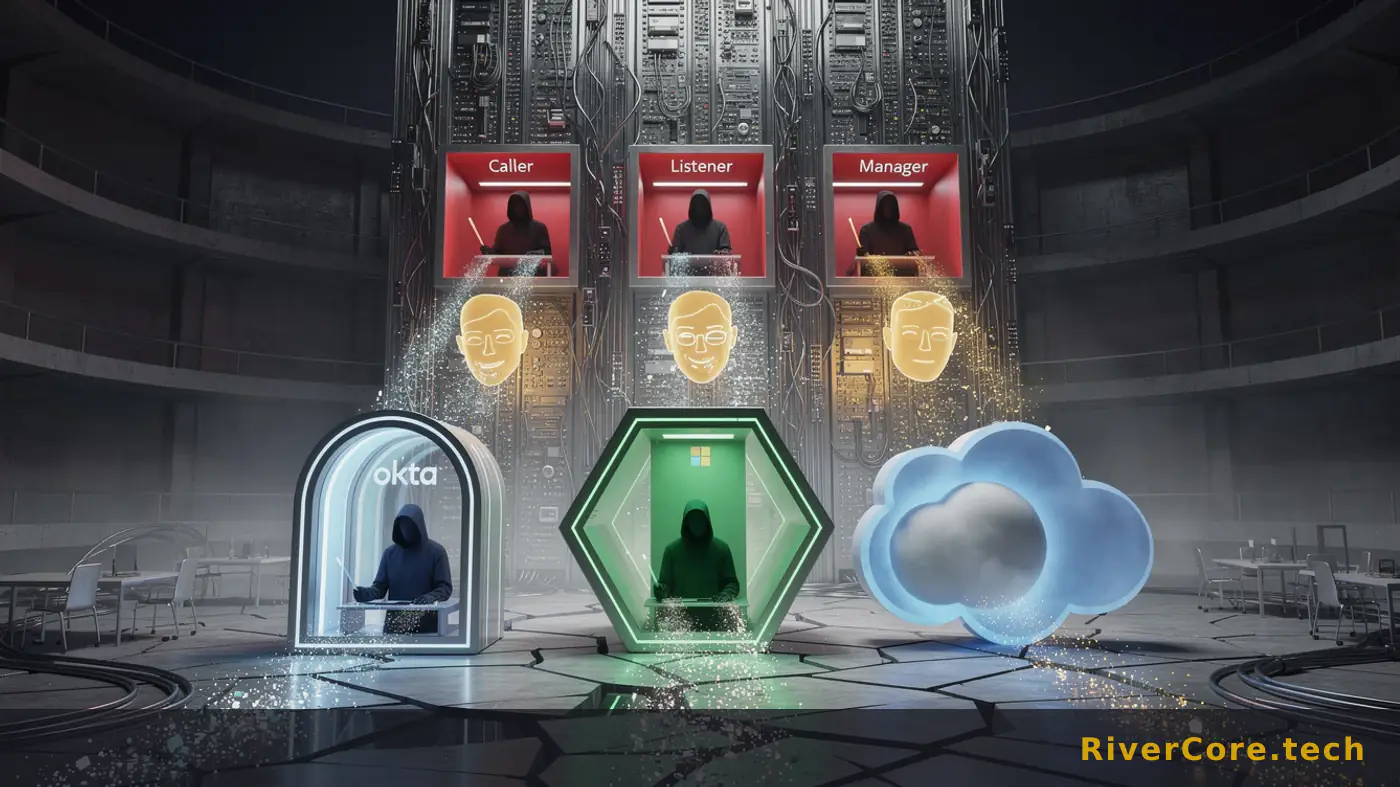
Three roles, one console, and a self-destruct button that wipes phishing sites and DNS records in a single click. That is the shape of Work Panel, the vishing platform Okta has now attributed to the intrusion cluster it tracks as O-UNC-045, also known as CORDIALSPIDER. The interesting number here is not a dollar figure, it is the role count: the operation formally separates callers from managers from administrators, which is closer to a call-center org chart than to a traditional phishing kit.
What Happened
On July 30, 2026, as CyberSecurityNews reported, Okta shared research describing Work Panel as a full web-based application for running a vishing-driven account takeover business. The framing matters. Okta explicitly did not call it a phishing kit. It called it an operator console, and it linked the tooling to CORDIALSPIDER activity aimed at customers of multiple identity providers.
The platform ships with sign-in templates for Okta, Microsoft 365, and Salesforce, which covers a large fraction of the enterprise identity surface for any mid-to-large company. An administrator inside Work Panel can register a domain, configure DNS, spin up an isolated phishing site with its own subdomain and web-server block, select one of those templates, and clone visual branding from a target organization. The platform can then send branded phishing emails driving employees to the site it just built.
Meanwhile, callers pull employee data (names, corporate email addresses, direct phone numbers, job titles, LinkedIn profiles) from commercial business-contact sources queried inside the panel, retrieve assigned VoIP credentials, and dial. Managers watch a live queue showing which phishing page each victim is currently viewing and push the next prompt: push approval, number matching, authenticator code, or a support-ticket completion step. The caller keeps the target on the phone. The manager collects the credential. The administrator can, at any moment, hit self-destruct and take the phishing site and its DNS records offline in one action.
Compare that to a 2023-era phishing kit, which was typically a single-operator PHP archive dropped on a compromised host. This is a different category of thing.
Technical Anatomy
The engineering choices inside Work Panel read like they were made by someone who has actually run an incident-response gauntlet from the other side. Three design decisions stand out.
First, role separation as a security-of-the-attacker control. Callers do not receive the credentials they help capture. That is not a UX detail, it is operational security. If a caller is arrested, turned, or simply careless, the credential trove stays with managers on separate infrastructure. It also makes callers cheap to recruit and replace, because they need no technical skill and hold nothing sensitive. The economic implication is that vishing labor becomes fungible, and the attacker's cost per attempted takeover drops.
Second, phishing panel isolation. Each phishing panel operates with its own subdomain, configuration, process, and web-server block. That maps directly onto the defender pain point of takedowns. If your only response to a phishing site is a domain takedown notice, Work Panel already assumes that and has architected around it. Combined with secret rotation, activity logging, and live caller monitoring, the platform behaves less like a kit and more like a small SaaS deployment. In MITRE ATT&CK vocabulary, the relevant techniques cluster around T1566 (Phishing), T1656 (Impersonation), and T1621 (Multi-Factor Authentication Request Generation), but the interesting layer is the orchestration around them.
Third, the real-time MFA pipeline. The manager view showing which phishing page a victim is viewing, with the ability to push a specific next-step prompt, is what lets the operation defeat push approvals, number matching, and TOTP authenticator codes. This is not a bypass of MFA cryptography, it is a bypass of MFA workflow assumptions. The user is on the phone with a "helpdesk agent" who has full situational awareness of the fake portal they are staring at.
The source does not disclose the hosting model, pricing, or subscriber count of Work Panel, which matters because those numbers would tell us whether this is a boutique tool used by one cluster or a rentable service already in the hands of dozens. My bound: if Okta is describing it as a "full application" with role management and self-destruct, the engineering investment implies more than a handful of users, but we cannot confirm that from the reporting.
Who Gets Burned
Any organization whose employees can be phoned by a stranger claiming to be from IT is in the target set. In practice, that is everyone, but some categories carry more exposure.
Identity provider customers first. The template support for Okta, Microsoft 365, and Salesforce is a direct statement of who is in scope. Enterprises that federate everything through one of those three now have a single, well-branded pretext surface. iGaming operators, fintech platforms, and crypto exchanges tend to concentrate high-value administrative access behind Okta or Entra ID, and their helpdesks handle enough MFA reset requests that a well-researched vishing call blends in. Compare a Salesforce admin account takeover at a payments company against a rank-and-file employee compromise: the blast radius on the former can include production data pipelines, customer PII, and outbound customer communications.
Second, mid-market companies without device-bound authentication. If your MFA posture is push notifications or TOTP codes on personal phones, Work Panel's real-time prompt pipeline is designed to defeat you. Passkeys and smart cards are the exception, and Okta explicitly recommends them.
Third, any organization with a support workflow that allows helpdesk agents to reset authenticators over the phone. That is the specific muscle Work Panel is exercising. The next ninety days will separate the shops that already have a callback verification protocol from those still relying on the caller's confidence and knowledge of internal jargon.
We do not yet know the confirmed victim count from CORDIALSPIDER activity attributed to Work Panel, which matters because it bounds how urgently to treat this versus other 2026 identity-focused campaigns. Testable prediction: if this reporting is representative, publicly disclosed helpdesk-driven account takeovers at identity-provider customers should climb through Q4 2026, with at least one high-profile named breach naming vishing as the initial vector by year end.
Playbook for Security Teams
Do these this week.
Move phishing-resistant authenticators off the roadmap and onto a deployment schedule. Okta's guidance points at passkeys and smart cards, and it is right. A passkey cannot be read aloud on a phone, and a push prompt approved during a vishing call cannot originate from an unregistered device if the authenticator is bound to hardware. If a full rollout is a multi-quarter project, prioritize the accounts that map to your worst-case scenarios: identity admins, finance, DevOps with production access, and customer support agents themselves.
Restrict access to sensitive applications to managed devices covered by endpoint security tooling, and add location-based access restrictions that deny sign-in attempts from countries, networks, or IP ranges where the business does not operate. This is table stakes and it still is not universally deployed.
Instrument authenticator lifecycle events as first-class security telemetry. Every enrollment, reset, and removal should generate a user notification and a log entry that a detection engineer sees. Work Panel's whole value proposition collapses if a compromised user gets a push notification saying "a new authenticator was added" and knows to call security.
Rewrite the helpdesk verification protocol. Treat inbound support calls, and outbound calls that claim to be support, as a verification problem with a defined, out-of-band step. No credential, no MFA prompt, and no authenticator change should proceed on the strength of a phone conversation alone.
Testable prediction: organizations that deploy passkeys to their identity-admin tier and add a callback verification step for authenticator changes should see MFA-related account takeover incidents drop measurably within two quarters. If they do not, the compensating controls are not where they think they are.
Key Takeaways
- Work Panel is an operator console, not a kit: three roles (caller, manager, administrator), live victim queues, and a one-click self-destruct that removes phishing sites and DNS records together.
- Sign-in templates cover Okta, Microsoft 365, and Salesforce, which puts most enterprise identity stacks in scope by default.
- Role separation means callers never touch the captured credentials, which lowers the attacker's labor cost and raises the defender's attribution difficulty.
- Push approvals, number matching, and TOTP codes are all defeated by the real-time manager prompt pipeline. Passkeys and smart cards are the honest mitigations.
- Unknown, and worth watching: the platform's user base, pricing, and hosting model. Okta has not published those numbers, and they determine whether this is a boutique tool or the beginning of vishing-as-a-service.
Frequently Asked Questions
Q: What is Work Panel and who runs it?
Work Panel is a web-based cybercrime platform that Okta has linked to an intrusion cluster it tracks as O-UNC-045, also known as CORDIALSPIDER. It combines target research, caller management, phishing-site creation, and stolen-credential handling into one application used for vishing-driven enterprise account takeovers.
Q: Why do passkeys defend against Work Panel when push MFA does not?
Work Panel's manager role watches a victim's live phishing session and pushes real-time prompts for push approvals, number matching, or authenticator codes while a caller keeps them on the phone. Passkeys and smart cards are bound to hardware and cannot be approved or read aloud during a call, so the real-time prompt pipeline breaks.
Q: Which enterprise applications are directly targeted?
Work Panel ships with sign-in templates for Okta, Microsoft 365, and Salesforce, and it can clone visual branding from a target organization. Any company federating access through those three providers should assume it is inside the addressable target set.