
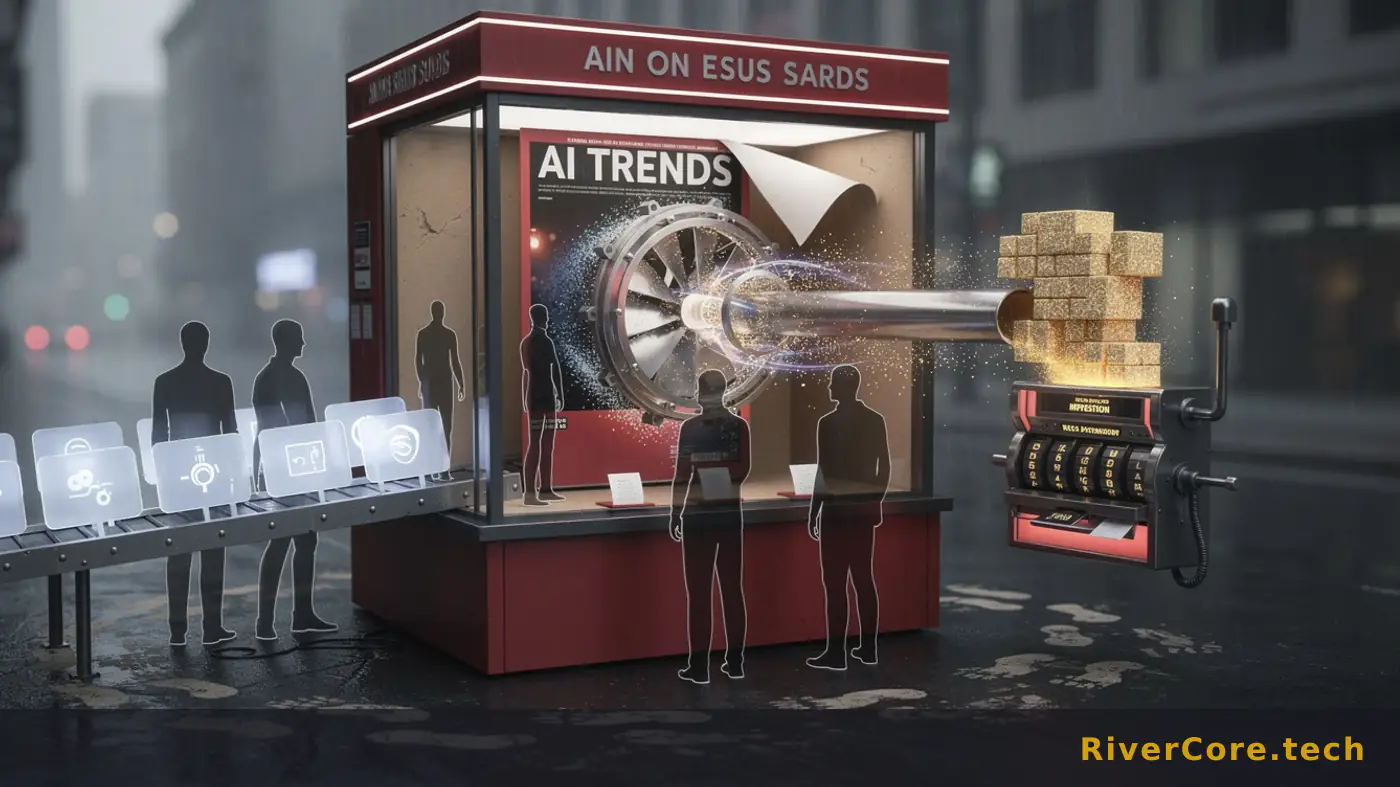
Ad Age's Empty AI Trends Page Is a Traffic Strategy Tell
Anyone who has run a content site through a Core Update knows the temptation: ship the headline first, fill in the substance later, let the URL accrue backlinks while you figure out what the article actually says. A June 2026 piece from Ad Age, titled "AI Emerging technology trends brands and agencies need to know about," reads like exactly that play. The URL promises a trend rundown covering OpenAI Codex and Google's AdCP. The page delivers a headline, a byline, and a stack of unrelated featured story teasers.
For performance marketers and platform engineers who lean on trade press to sanity-check roadmap bets, that is a problem. It is also a signal about where publisher traffic strategies are heading.
Key Details
The piece, as Ad Age published it, carries a byline from Asa Hiken and a timestamp of June 04, 2026 at 05:00 AM EDT. The slug references OpenAI Codex and Google AdCP, two topics a senior ad-tech reader would click on without hesitation. The headline promises AI emerging technology trends brands and agencies need to know about.
What actually renders on the page is a shell. There is no body copy analyzing Codex, no breakdown of AdCP, no expert quotes, no product screenshots, no vendor commentary. Instead the page surfaces four featured stories that have nothing to do with the headline topic.
Those featured stories are the Hottest Brands 2026 roundup by Adrianne Pasquarelli, which highlights Grillo's Pickles, Nuuly, NeeDoh, Dutch Bros, and Pink as five of America's Hottest Brands. There is a Tim Nudd piece on agency Manual's visual identity work for the Obama Presidential Center. There is an Agency Brief column by Ewan Larkin covering Edelman's cultural bet and Farmers' reviews wrap. And there is a marketing winners and losers of the week roundup co-bylined by Adrianne Pasquarelli and E.J. Schultz.
Every one of those stories is a legitimate piece of Ad Age reporting. None of them explain OpenAI Codex or Google AdCP. A reader clicking the URL for AI trends analysis lands on a hub of consumer brand and agency-side content instead.
The gap between the promise in the slug and the substance on the page is the story. This is not a broken template. It is a live URL, indexed, dated, bylined, sitting under a technology and AI category path.
Why This Matters for Performance Marketing
Trade publishers have always played SEO games. What is different in 2026 is that AI Overviews, Perplexity answer boxes, and ChatGPT search citations are rewriting the value of a keyword-loaded URL. A page titled around Codex and AdCP is not just fishing for Google clicks anymore. It is fishing to be cited by generative answer engines that scrape headline plus dateline plus first paragraph and turn it into a source pill next to an AI answer.
The uncomfortable read: if the LLM crawler grabs the title and metadata but the human reader gets nothing, the publisher still wins on referral metrics while readers lose. That asymmetry is the new content-farm arbitrage.
For performance marketers, the practical damage is real. Media planners drop keywords like "Google AdCP" into daily briefings. If the top-ranking trade result on that query is a teaser shell, briefings get built on nothing. I have seen production incidents that trace back to exactly this pattern: a platform lead reads a headline, assumes coverage exists, cites the URL in a Slack thread, and a roadmap decision gets made against a phantom source.
The engineering-adjacent version of this problem is worse. Ad ops teams evaluating Google's AdCP need documented behavior, not vibes. Google's own Ads API docs and the IAB Tech Lab specs remain the load-bearing references. Trade press is supposed to translate those into strategy. When translation gets replaced by teaser SEO, the industry loses its middle layer.
My take: every performance team should keep a private allowlist of trade sources whose article bodies actually match their headlines. Treat everything else as a link farm.
Industry Impact
Zoom out and this is a traffic-strategy story about the entire trade press stack that serves iGaming, fintech, ad-tech, and crypto. Every one of those verticals depends on a small group of specialist publishers to cover product launches, regulatory shifts, and platform changes. When those publishers optimize for headline discoverability over article substance, engineering teams lose their fastest signal channel.
Consider the operational cost. A CTO scanning trade coverage for thirty minutes a day at a 10-person startup is burning roughly one twentieth of a senior salary on information gathering. If half of that reading time lands on teaser shells, that is meaningful money spent on noise. Multiply across a Series B engineering org and the waste compounds fast.
The featured stories on the Ad Age page tell you where the publisher's traffic actually converts. Consumer brand roundups like the Hottest Brands 2026 piece from Adrianne Pasquarelli. Agency profile pieces like Tim Nudd's Obama Presidential Center coverage. Weekly winners and losers. Those are the formats that hold reader attention and drive newsletter signups. AI trend pages, apparently, do not need to hold attention. They just need to exist and rank.
For ad-tech and iGaming platform teams, the takeaway is not to boycott Ad Age. The publication does real reporting. The takeaway is that the incentive structure driving AI-adjacent content in trade press is broken enough that primary sources deserve more weight than ever. Vendor changelogs, GitHub repos, and standards bodies beat SEO-optimized trends pages every time.
What to Watch
The signal to track over the next two quarters is whether AI answer engines start penalizing teaser shells. Google's Search Quality guidelines have historically treated thin content as a demotion candidate. Generative answer systems have not yet developed the same reflex. When they do, publishers running headline-only URL strategies will see traffic collapse fast.
Watch three things. First, whether Ad Age and peer trade publishers backfill URLs like this one with real substance after the fact, or leave them as permanent teasers. Second, whether AI Overviews start citing these shell pages as sources, which would be a red flag for anyone relying on generative search for competitive intelligence. Third, whether the trade press starts differentiating "analysis" URLs from "aggregation hub" URLs at the template level, the way major consumer publishers already do.
For platform engineers, the tactical move is simpler. Build your morning intel scan around primary sources: vendor docs, standards bodies like Privacy Sandbox, and API changelogs. Use trade press for narrative context, not for facts you would put in a design doc.
Key Takeaways
- A June 2026 Ad Age URL promising AI trends coverage of OpenAI Codex and Google AdCP delivers a headline and featured story links, with no substantive article body.
- The featured stories that do render (Hottest Brands 2026, the Obama Presidential Center identity piece, Agency Brief, winners and losers) are legitimate but unrelated to the headline topic.
- Teaser-shell URLs are increasingly optimized for AI answer engine citation, creating asymmetric value where publishers win referrals and readers get nothing.
- Performance marketing and ad-tech teams should treat trade press as narrative context and rely on vendor docs, standards bodies, and API changelogs for load-bearing decisions.
- Track whether generative search systems start demoting thin content the way traditional SEO eventually did. Until they do, expect more shells like this one.
Frequently Asked Questions
Q: What is Google AdCP and why does it matter for ad-tech teams?
Google AdCP is referenced in the Ad Age URL slug as an emerging AI-related ad technology topic, though the article itself does not describe it. Ad-tech engineering teams should consult Google's official Ads API documentation for authoritative specifications rather than relying on trade press summaries.
Q: Why do publishers ship article URLs with no article body?
The dominant reason in 2026 is discovery traffic. A live URL with a keyword-loaded headline can accrue backlinks, rank in search, and get cited by AI answer engines even without substantive content. The economics favor shipping the shell first and worrying about substance later.
Q: How should engineering leaders sanity-check trade press claims?
Cross-reference every load-bearing claim against primary sources. Vendor documentation, standards bodies like IAB Tech Lab, and official API changelogs are more reliable than trade press for technical decisions. Use trade coverage for market narrative and strategic context, not for facts you would cite in a design document.

Google Ads API Now Demands Passkeys for New Refresh Tokens
Google's August 5 passkey mandate for new Google Ads API refresh tokens breaks silent-onboarding flows and adds a seven-day trust window agencies must plan around.
Meta Ads Get Pricier in India as CPMs Climb 15-20%
Meta ad prices in India are up 15-20% year-on-year while the pool of actual online shoppers barely grew. The auction is eating D2C margins.

Taboola Buys Dianomi to Lock Down Financial Ad Inventory
Taboola is acquiring Dianomi to feed premium financial inventory into its Realize platform. The real story is vertical consolidation and what it means for performance budgets in 2027.