
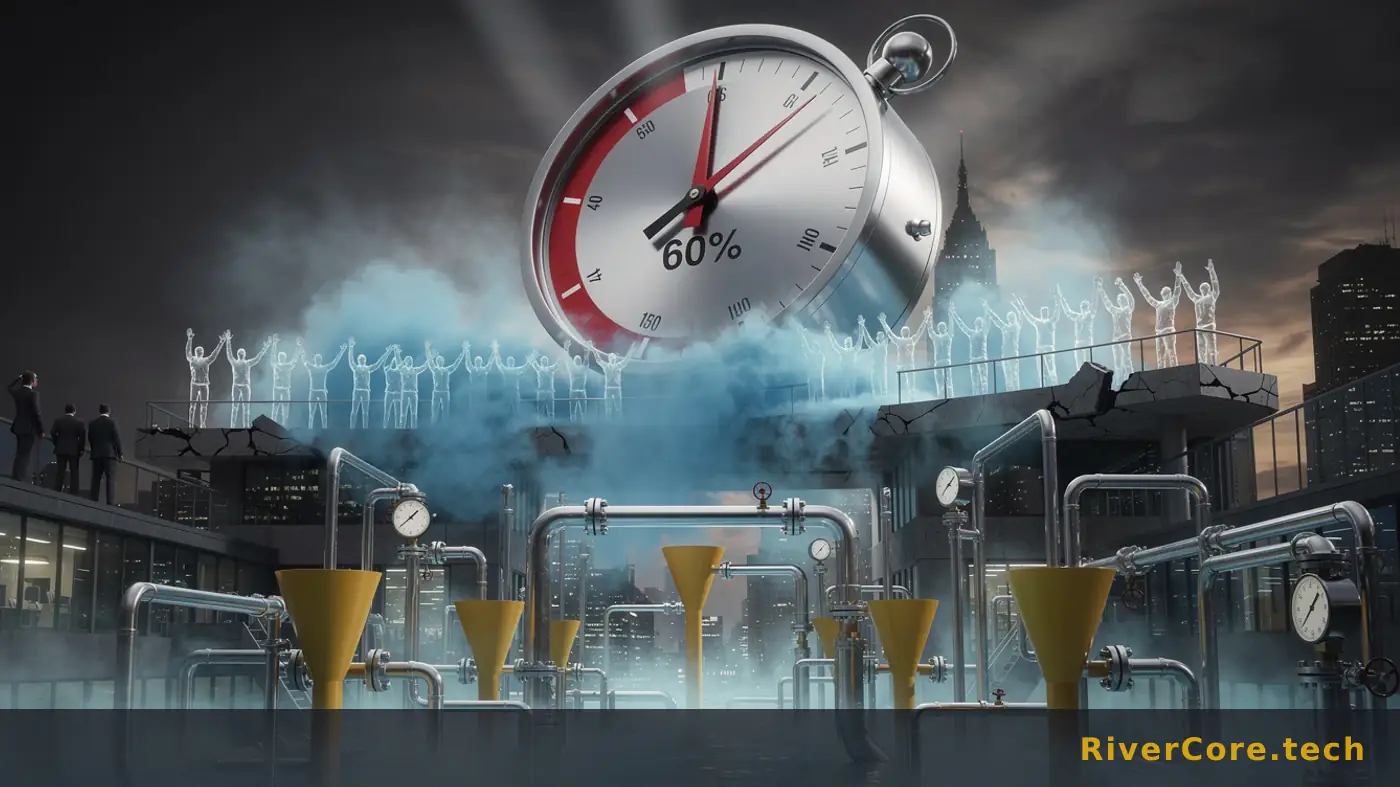
Ad Age Confidence Index: 60% Expect Worse Conditions in Six Months
Nearly six in 10 respondents to Ad Age's inaugural Confidence Index expect industry conditions to worsen over the next six months. That is not a lagging complaint from a bad quarter, it's a forward-looking majority betting against their own business. When the median practitioner in an industry expects things to deteriorate, the operational decisions that follow (budget cuts, vendor consolidation, automation acceleration) are usually already in motion by the time the survey publishes.
The Numbers
The headline figure, as Ad Age reported in its June 11 roundup, is that nearly 60 percent of respondents to its first Confidence Index expect the next six months to be worse than the present. The companion piece by Jess Nagamoto carries the quote "It can't get any worse" in its headline, which tells you something about the qualitative register underneath the quantitative result.
A few things are worth unpacking before anyone treats this as a general recession signal. First, this is Ad Age's first Confidence Index, which means there's no historical baseline to compare against. We don't know if 60 percent bearish is unusually pessimistic for this industry or roughly where sentiment sits during any given cycle. The source does not disclose the sample size, the respondent mix (agency vs brand vs ad tech vendor), or the geographic weighting, all of which matter because a survey heavy on holding-company employees will read very differently from one weighted toward independent performance shops.
Second, sentiment surveys in advertising have historically been noisy leading indicators. They tend to overreact to visible layoffs and undershoot on structural shifts. The Confidence Index is landing at the same moment as three other stories in the same Ad Age roundup: Garett Sloane on Meta and Google generating ads without user prompting, Brandon Doerrer on media teams cutting the number of ad tech partners they work with, and Jon Springer on CarMax's sponsorship activation with Gotham FC. Read together, those four pieces sketch a coherent picture: budgets tightening, vendor rosters shrinking, generative AI absorbing creative production inside the walled gardens, and brand marketing looking for measurable off-platform activations like sports.
The comparison I'd draw is to the 2022 to 2023 ad tech contraction, when public ad tech multiples compressed sharply and independent SSPs consolidated. That cycle was driven by macro rate hikes and the first serious cookie deprecation timelines. This cycle looks different in cause (AI-driven margin compression on the agency side, platform consolidation on the buy side) but similar in effect (fewer vendors, fewer intermediaries, less budget for experimental spend). If the 60 percent bearish reading holds through a second Confidence Index in Q4, that's the confirmation signal. If it snaps back to a coin flip, this was sentiment overshoot.
What's Actually New
The genuinely new element isn't the pessimism, it's what the pessimism is a reaction to. Prior downturns in the ad economy were about demand: less spend chasing the same inventory. This one has a supply-side twist that the four Ad Age pieces collectively point at.
Meta and Google's AI can now create ads without the advertiser asking, according to the Sloane piece, which flags the "rogue agents" framing. That is a material change in the buy-side workflow. For a decade, the platforms provided placement and measurement while agencies and creative shops provided the assets. If the platforms generate the assets themselves, the agency creative fee compresses toward zero on the long tail of SKUs. It doesn't kill the top-of-funnel brand work (see CarMax and Gotham FC, which is still very much human-directed sports marketing), but it hollows out the performance creative middle where most agency headcount actually sits.
Doerrer's reporting on media teams reducing ad tech partner counts is the other half of the same trade. When platforms absorb more of the creative and optimization stack, the marginal utility of a fifteenth DSP integration or a fourth attribution vendor drops. Buyers rationalize. The IAB Tech Lab standards work on OpenRTB and ads.txt was supposed to make the long tail of ad tech interoperable and therefore survivable. What it may have actually done is make it easy for buyers to swap out redundant vendors without breaking the pipes.
For traffic-focused engineering teams, this is the practical read: the number of integrations you have to maintain is going down, but the depth of each remaining integration is going up. Direct Google Ads API work and Meta Marketing API plumbing are becoming more load-bearing, not less, because the automated creative generation happens on their side and the conversions data has to flow back cleanly for their models to work. Testable prediction: if this dynamic holds, we should see job postings mentioning "Google Ads API" or "Meta CAPI" grow faster than postings mentioning specific third-party DSPs over the next four quarters.
What's Priced In for Performance Marketing
Some of this is old news that the market has already absorbed. The direction of vendor consolidation has been visible since roughly 2023, and any performance marketing lead who hasn't already trimmed the ad tech roster is behind, not ahead. The Doerrer piece is documenting a trend, not predicting one. Similarly, the general anxiety about AI eating agency creative work has been the loudest conference topic for two years running. If your pricing model still assumes billable hours for variant generation on programmatic display, you were already exposed.
What isn't priced in, in my read, is the second-order effect on attribution. When Meta and Google generate their own ads, the platforms are simultaneously the creative producer, the media owner, the auction house, and the measurement provider. The conflict of interest was always there, but it was somewhat diluted when a human agency sat between advertiser intent and platform output. Remove that human, and the feedback loop becomes fully closed inside the walled garden. The Privacy Sandbox attribution reporting APIs were designed for a world where third parties still did meaningful measurement. In a world of self-generating ads, the questions "did this creative work" and "should we make more like it" both get answered by the same entity that made the ad in the first place.
The source does not disclose whether the Confidence Index respondents were asked specifically about AI-driven creative or attribution concerns, which matters because if the 60 percent bearish number is driven by generic macro anxiety, the recovery is one good quarter away. If it's driven by structural fear about platform absorption, it isn't.
Contrarian View
The consensus read on "60 percent expect worse" is that the ad economy is in trouble. The contrarian read is that this is exactly the sentiment profile you want to see before a productivity boom.
Consider: media teams reducing ad tech partner counts is efficiency, not decay. Platforms generating creative without prompting removes a real cost center from advertiser P&Ls. Brand-side activations like CarMax and Gotham FC continue because measurable sponsorship works. If the pessimism in the Confidence Index is coming from ad tech vendors and mid-tier agencies (the parties being disintermediated) rather than from brand advertisers themselves, the industry isn't shrinking, it's reallocating.
I'd argue the more interesting question is whether performance marketing budgets in absolute dollars are actually declining, or whether the same dollars are just flowing through fewer intermediaries with lower take rates. The source doesn't answer that, and until Ad Age publishes a second Confidence Index with a segment breakdown, we won't know. The bound: if brand-direct spend on Meta and Google grows year over year while agency revenue shrinks, the pessimism is a vendor-class complaint, not an industry crisis.
Key Takeaways
- Nearly 60 percent of Ad Age Confidence Index respondents expect worse conditions in six months, but this is the first edition of the index, so there is no baseline to compare against.
- The genuinely new dynamic is supply-side: Meta and Google now generate ads without advertiser prompting, which compresses the performance-creative middle of agency work.
- Media teams cutting ad tech partner counts is a lagging indicator of platform consolidation, not a leading one. Engineering teams should expect fewer, deeper integrations with Google Ads and Meta Marketing APIs.
- The attribution problem gets worse when the platform is producer, seller, and measurer of the ad. Independent measurement value goes up, not down.
- Testable prediction: if the Q4 2026 Confidence Index shows sentiment recovering while agency headcount continues declining, the bearishness was a vendor-class signal, not a demand-side one.
Frequently Asked Questions
Q: What did Ad Age's first Confidence Index actually measure?
The source indicates it captured industry sentiment on forward conditions, with nearly six in 10 respondents expecting the next six months to be worse. Ad Age has not disclosed the sample size, respondent mix, or methodology in the material available, so it should be read as directional sentiment rather than a calibrated economic indicator.
Q: How does AI-generated ad creation by Meta and Google affect performance marketing teams?
It removes a significant portion of the manual creative variant work that agencies and in-house teams have historically billed for. It also concentrates more of the optimization loop inside the platforms themselves, which means engineering effort shifts toward deep API integration and clean conversion data flow rather than managing external creative tools.
Q: Why are media teams reducing their number of ad tech partners?
The Brandon Doerrer piece points to consolidation, and the practical driver is that when platforms absorb more of the stack (creative generation, optimization, measurement) the marginal value of additional third-party vendors drops. Buyers rationalize toward fewer, more deeply integrated partners rather than maintaining broad rosters.

Google Ads API Now Demands Passkeys for New Refresh Tokens
Google's August 5 passkey mandate for new Google Ads API refresh tokens breaks silent-onboarding flows and adds a seven-day trust window agencies must plan around.

Meta Ads Get Pricier in India as CPMs Climb 15-20%
Meta ad prices in India are up 15-20% year-on-year while the pool of actual online shoppers barely grew. The auction is eating D2C margins.

Taboola Buys Dianomi to Lock Down Financial Ad Inventory
Taboola is acquiring Dianomi to feed premium financial inventory into its Realize platform. The real story is vertical consolidation and what it means for performance budgets in 2027.