

ClickHouse Hits $250M ARR and Bets the Stack on Claude Agents
Open House 2026 opened this week with the kind of numbers that force a board-level conversation. ClickHouse tripled its annual run-rate revenue inside twelve months, crossed 4,000 customers, and used the keynote to ship an agentic analytics layer powered by Anthropic's Claude. For any platform lead with a renewal coming up on Snowflake, Databricks, or BigQuery in the next two quarters, this is the moment the negotiating position changed.
The story underneath the press release is about unit economics and where the new AI workload budget actually lands. That budget is being argued over right now in finance committees, and the architecture decision attached to it will define hiring plans through 2027.
What Happened
As iTWire reported, ClickHouse opened its second annual user conference by announcing it has crossed US $250 million in annual run-rate revenue, more than triple a year ago, and reached 4,000 total customers. The growth curve is what matters here: when the company closed its $400 million Series D in January 2026, it had just crossed 3,000 customers. One quarter later, it added another thousand net new logos.
The customer roster reads like a who's-who of the workloads that break traditional warehouses. New names announced include Capital One, Lovable, Decagon, Polymarket, and Airwallex. The existing base already includes Anthropic, Meta, Cursor, Sony, Tesla, Memorial Sloan Kettering, Lyft, and Instacart. Notice the mix: regulated finance, prediction markets, AI-native startups, and one of the largest model labs in the world.
The headline launch is ClickHouse Agents, a fully managed agentic analytics service running on Claude. It ships with a chat interface, a sandboxed code interpreter, shareable artifacts, skills management, memory, and multi-agent workflows. It's a no-code agent builder that connects natively to MCP-compatible third-party systems and includes a native integration with the AWS Agent Registry.
Around that headline sit five additional product moves: Managed Postgres in public beta with native integration to ClickHouse analytics, Managed ClickStack for infrastructure and model-training observability, Langfuse (acquired in January) for agent correctness and model-cost tracking, general availability of full-text search, automatic query optimization that the company claims puts it on par with established warehouses on TPC-H, agentic onboarding from sign-up to first production query, and cross-region replication for enterprise resiliency.
Then came the knife: CostBench, an open benchmark comparing ClickHouse Cloud against Snowflake, Databricks, BigQuery, and Redshift on cost-per-query. ClickHouse's headline claim is 23x better cost-performance than the nearest competitor.
Technical Anatomy
The interesting architectural decision is not the agent product itself. It's the stack assembly underneath it. ClickHouse is now pitching a single vendor surface that covers transactional state (Managed Postgres), real-time analytics (the core engine, see ClickHouse docs), observability of both infrastructure and AI systems (ClickStack plus Langfuse), and the agent runtime that queries all of it. That's a deliberate land grab on the boundary between OLTP, OLAP, and AI ops.
CEO Aaron Katz framed it explicitly: "More than 1,000 new customers and a tripling of ARR within months of our Series D tell us this isn't a cycle, it's a structural shift in what data infrastructure has to do." Translated: ClickHouse is betting that agent workloads, with their high-concurrency, low-latency, cost-sensitive query patterns, look nothing like the batch reporting workloads Snowflake and BigQuery were architected for a decade ago.
The CostBench methodology is worth scrutiny. The company says it applies each vendor's real compute billing model to the same analytical workload, producing directly comparable cost-per-query results. The full benchmark and interactive explorer are at clickhouse.com/benchmarks. Snowflake and Databricks will publish responses within weeks. They always do. But the framing has already shifted: the conversation in 2026 is cost-per-query at agent concurrency, not raw scan speed on a quarterly board deck.
The Claude integration is the part most teams will underestimate. By picking Anthropic as the model provider and shipping MCP-compatible connectors plus AWS Agent Registry integration, ClickHouse is positioning itself inside the emerging agent interoperability standards instead of building a walled garden. That's a hiring-market signal as much as a product one. The talent pool that knows Claude, MCP, and columnar databases is small and getting expensive.
The Langfuse acquisition matters more than the announcement suggests. Agent observability, correctness, evaluation, and model-cost tracking, is the missing layer in nearly every production AI deployment I see. Owning it inside the same billing relationship as the data warehouse is a serious lock-in story.
Who Gets Burned
Three groups should be reading this carefully. The first is incumbent warehouse vendors. If CostBench holds up to independent reproduction, even at half the claimed advantage, the procurement math for any AI-heavy workload tilts hard. Snowflake's pricing model in particular was built for a world where queries were intermittent and expensive. Agent traffic is the opposite: constant, small, and cost-sensitive.
The second group is internal platform teams who built their analytics stack on a "single warehouse, BI on top" pattern between 2020 and 2023. The AI workload your product team is about to ship in Q3 has different access patterns than the dashboards your warehouse was sized for. You will discover this when the bill arrives, not when the architecture review happens.
The third group, and this is where it gets uncomfortable, is the army of analytics engineers whose careers are built on transformation pipelines tuned for daily batch. Tools like dbt remain essential, but the center of gravity is moving toward sub-second query patterns and agent-grounded analytics that don't fit the nightly DAG model.
The CFO at any series-B or later company running material spend on Snowflake, Databricks, or BigQuery should be asking their Head of Platform this week: what percentage of our warehouse compute is now agent-driven or low-latency application traffic, and what would a 12-month side-by-side pilot on ClickHouse Cloud cost us in engineering hours versus what it might save us in compute? That is the single highest-use question on the data infrastructure roadmap right now, and it has a 90-day answer.
For regulated verticals (iGaming, fintech, prediction markets), the addition of Capital One, Airwallex, and Polymarket to the customer list is a signal that compliance and audit posture has matured enough for the GC to sign off. That removes one of the historical objections.
Playbook for Data Teams
If you run a data platform, three concrete moves this quarter. First, segment your current warehouse spend by workload pattern. Identify what percentage is high-concurrency, low-latency, application-facing or agent-facing. That bucket is the migration candidate. Everything else can stay where it is for now.
Second, run CostBench against your own representative workload before you trust the headline number. The 23x claim is a marketing artifact until you reproduce it on your data shape and your concurrency profile. Spin up a ClickHouse Cloud trial, port one realistic query pattern, and compare against your current bill on the same workload. Two engineers, two weeks.
Third, treat the agent layer as a separate procurement decision from the warehouse. ClickHouse Agents is interesting, but locking your agent runtime to your warehouse vendor is the kind of decision your successor will curse you for in 2028. The MCP-compatible angle and AWS Agent Registry integration suggest portability is at least architecturally possible. Verify that before you ship anything to production.
On the hiring side, the supply of engineers who genuinely understand columnar query optimization at agent-driven concurrency is tight. If you're planning to migrate workloads, budget for either a senior hire or a six-month consulting engagement. The talent premium is real and it will not get cheaper as ClickHouse's customer count keeps climbing.
Key Takeaways
- ClickHouse tripled ARR to over $250M and added 1,000 net new customers in one quarter, with names like Capital One, Airwallex, and Polymarket signaling regulated-vertical acceptance.
- ClickHouse Agents, powered by Claude with MCP and AWS Agent Registry integration, positions the company across the OLTP-OLAP-AI ops boundary instead of just the analytics box.
- CostBench claims 23x cost-performance advantage over the nearest cloud warehouse competitor. Verify this on your own workload before treating it as gospel.
- The Langfuse acquisition gives ClickHouse an agent observability story (correctness, eval, model-cost tracking) that most stacks are missing.
- Teams evaluating warehouse renewals in the next two quarters should now be asking what percentage of their compute is AI-driven and whether their current vendor's pricing model fits that pattern.
Frequently Asked Questions
Q: How does ClickHouse Agents differ from a standard BI tool with an LLM bolted on?
ClickHouse Agents is a fully managed agentic analytics service running natively on Claude inside ClickHouse Cloud, with a sandboxed code interpreter, memory, multi-agent workflows, and native MCP plus AWS Agent Registry integration. It's a no-code agent builder grounded directly in ClickHouse data, not a chat overlay on top of a separate warehouse.
Q: Should I trust the 23x CostBench claim against Snowflake, Databricks, BigQuery, and Redshift?
CostBench is published as open and reproducible, with methodology and interactive explorer available at clickhouse.com/benchmarks. The right move is to reproduce it on your own representative workload and concurrency profile before making procurement decisions. Vendor benchmarks always favor the publisher; the question is by how much on your data shape.
Q: What does ClickHouse's Langfuse acquisition mean for AI observability?
Langfuse, acquired in January 2026, provides agent observability covering correctness, evaluation, and model-cost tracking for production AI systems. Combined with Managed ClickStack for infrastructure and model-training observability, it gives ClickHouse a unified story across data, agents, and AI ops inside one billing relationship.

Databricks Puts Decision Models in SQL: The Build-vs-Buy Call
Databricks just made open-weight decision models callable from a SQL prompt. For platform leads, it reframes a build-vs-buy question that was supposed to take all of Q4.

Oracle's Lakehouse Bet: 63% of Firms Aren't AI-Ready
Oracle rebrands Autonomous Data Warehouse as AI Lakehouse, betting that 63% of firms unready for AI data management want federation, not migration.
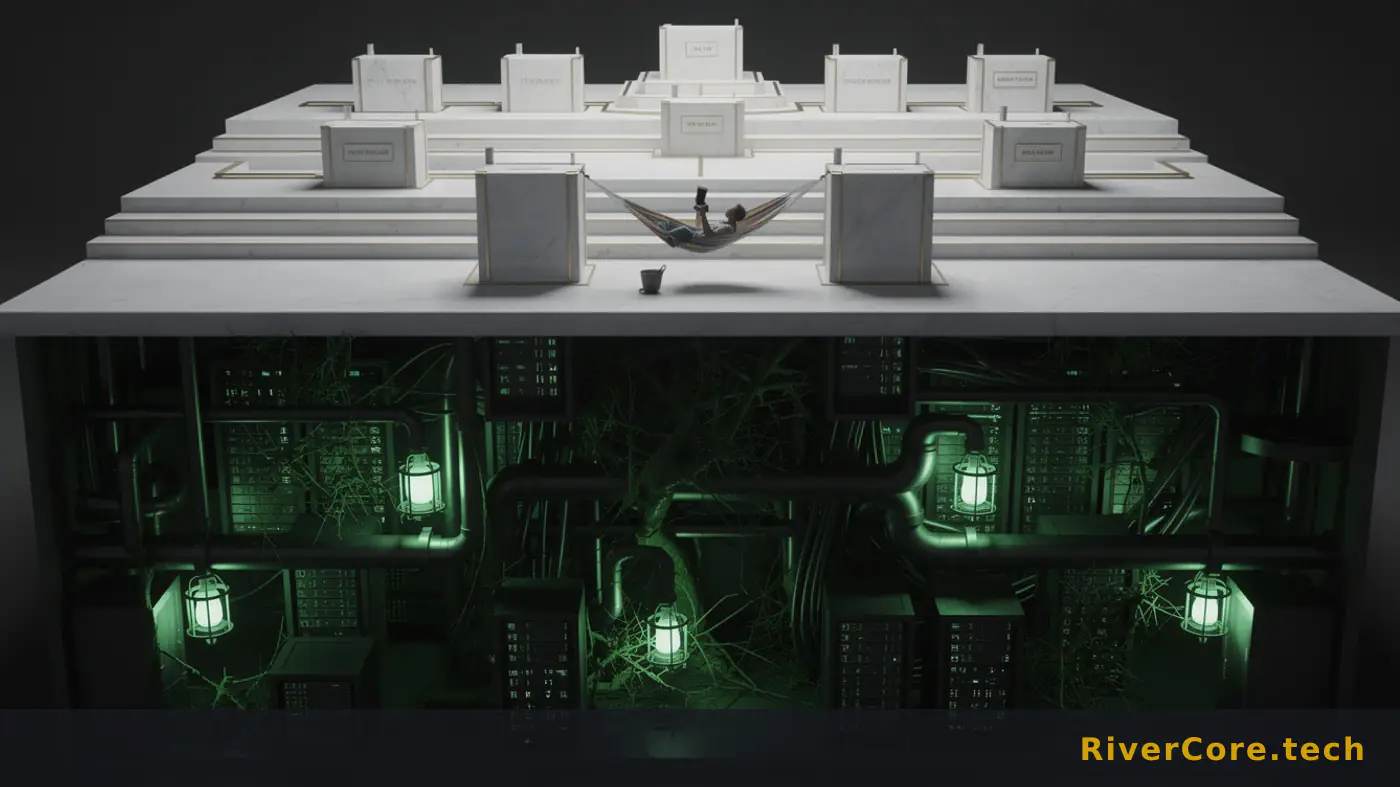
The 3-Hour Data Engineer: What Shadow Automation Costs Platform Teams
A viral Reddit post about a data engineer working three hours a week exposes a real platform governance problem: shadow automation that never enters the org chart.