
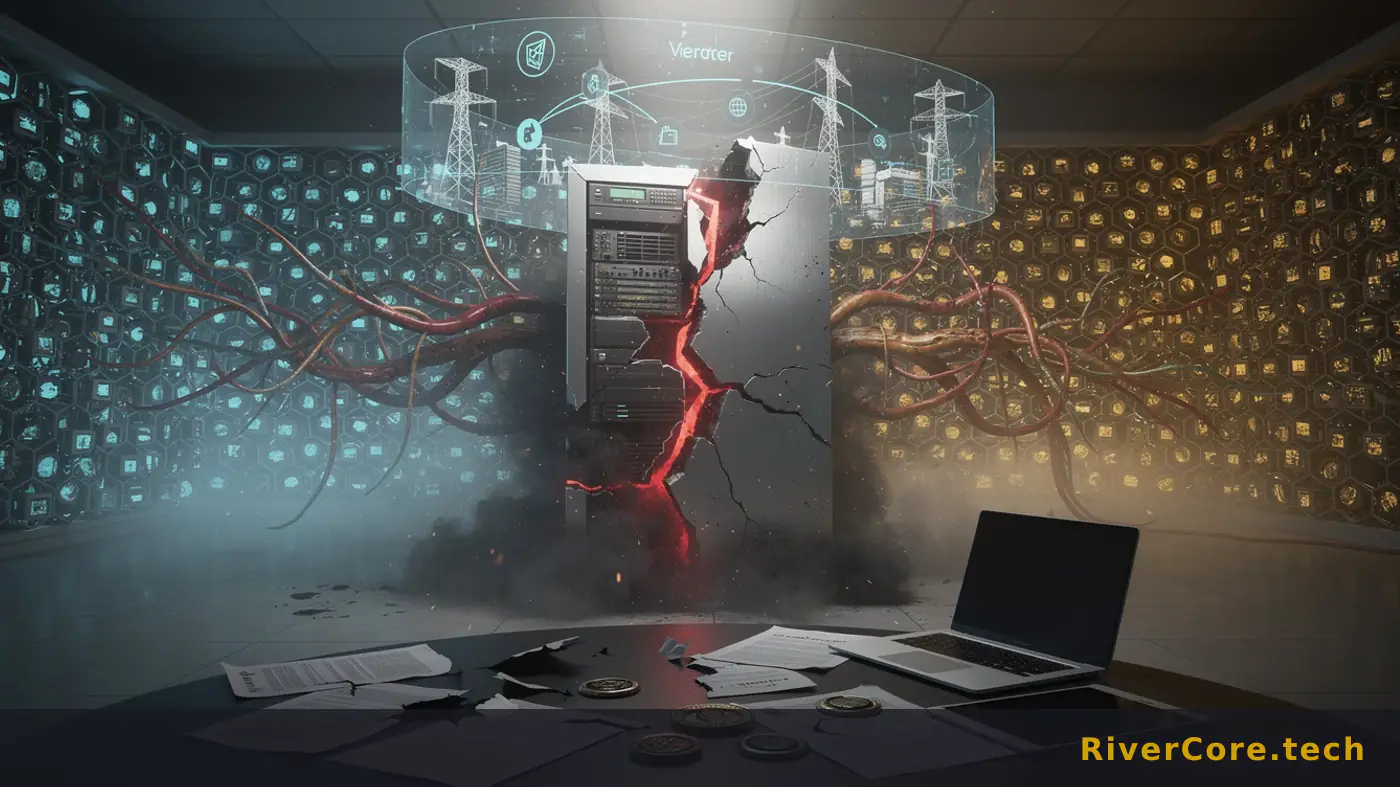
Itron Breach Forces Utility CTOs to Rethink Vendor Risk
Every utility CTO with an Itron contract on the books should be on a call this week with their GC and their head of OT security, working through one question: what does our master services agreement actually say about a breach of the vendor's corporate IT, as opposed to our endpoints? That distinction is about to be tested. Itron, the Washington-based public company that manages 112 million utility endpoints, just disclosed that an unauthorized third party got into its internal systems, and the contractual fallout will outlast the forensic report.
What Happened
Itron filed an 8-K with the SEC disclosing that on April 13, 2026 it was notified an unauthorized third party had gained access to certain of its systems. The detection happened last month, the company activated its incident response plan, brought in external advisors, and looped in law enforcement. As BleepingComputer reported, the unauthorized activity has been blocked and Itron has observed no follow-up activity since containment.
The company's framing of the incident is careful, and that carefulness matters. Itron stated that business operations recorded no material disruption, that it does not currently expect any subsequent impact, and that it expects a significant portion of incident-related costs to be covered by insurance. It also said the unauthorized activity did not extend to customers. Crucially, it added that the investigation into scope and impact is still ongoing. Those last seven words are what every customer security team should be reading twice.
For context on the target: Itron is listed on NASDAQ, employs roughly 5,600 people, reported $2.4 billion in 2025 revenue, and serves 7,700 customers across 100 countries. Its product surface touches electricity grids, water distribution, and gas networks. No ransomware group has claimed the attack, which is itself a signal worth parsing. Itron had not responded to BleepingComputer's request for more details at time of publication.
Technical Anatomy
The 8-K language tells a deliberately limited story: internal systems, contained, no customer extension, investigation ongoing. What it doesn't tell you is the architecture question every platform lead in critical infrastructure should be modeling right now. Vendors like Itron sit in an unusual position. Their corporate IT estate, the one that just got breached, typically holds engineering schematics, firmware build pipelines, customer telemetry pulled back for analytics, support tooling with privileged remote access, and the credentials and certificates used for over-the-air updates to those 112 million endpoints. The endpoint network may be physically and logically separate. The trust relationships rarely are.
That's the part the disclosure leaves open. "Did not extend to customers" is a statement about lateral movement observed so far. It is not a statement about source code, signing keys, build artifacts, or support VPN credentials that could later be used to reach customers through the front door of a legitimate update channel. The SolarWinds and 3CX patterns of the last few years have trained mature security teams to treat vendor corporate breaches as supply chain incidents until proven otherwise. The MITRE ATT&CK framework has a whole category for this, trusted relationship abuse, precisely because the blast radius of a vendor compromise rarely stops where the vendor's network does.
The absence of a ransomware claim is also telling. Financially motivated groups generally claim quickly to maximize extortion use. Silence after a confirmed intrusion at a critical infrastructure vendor points more often to either an in-progress negotiation, a non-extortion actor (state aligned, espionage motivated), or a criminal group still working through what they took. None of those three scenarios is good news for downstream utilities, and all three justify treating Itron's investigation as live for at least another 60 to 90 days regardless of what the next 8-K amendment says.
Who Gets Burned
Three groups absorb the impact, in roughly this order. First, the 7,700 customer utilities. Their procurement and security teams now have to reopen vendor risk files that probably haven't been touched since the original signing. Second, Itron itself, which faces an insurance claim cycle, an SEC follow-on disclosure obligation, and likely customer-by-customer attestation requests that will eat thousands of hours of solutions engineering time. Third, every other utility technology vendor pitching against Itron in the next six months, who will be asked harder questions in security reviews and who may or may not have better answers.
The CFO at any mid-sized utility carrying Itron in the stack should be asking their CISO this week whether the existing vendor management program treats a corporate IT breach at a connected vendor as a trigger event for re-attestation, key rotation, and contract review, or whether it only triggers on confirmed customer data exposure. Most programs I've seen lean on the second standard. That standard is not going to age well.
For the broader fintech and crypto infrastructure crowd reading this and thinking it doesn't apply, it does. The pattern is identical to a custodian, a payments processor, or a node provider disclosing an internal IT breach with the words "no customer impact observed at this time." The right reflex is the same in every vertical: rotate, re-baseline, and re-read the contract. The wrong reflex is to wait for the vendor's next press release.
Playbook for Security Teams
Concrete actions for utility platform and security leads with Itron in the stack, this week:
- Pull the contract. Identify the notification clauses, the audit rights, and the indemnification language tied to vendor security incidents. Send the relevant excerpts to GC before the next status call with Itron.
- Inventory every Itron-issued credential, certificate, API key, and remote support pathway in your environment. Treat them as suspect until Itron confirms in writing that none were exposed.
- Pin firmware update sources. If your operational model allows it, hold off on accepting non-critical Itron-signed updates for the next 30 to 60 days, or stage them aggressively with out-of-band verification.
- Map the trust boundary. Document exactly which Itron systems can reach which of your systems, in which direction, and on which protocols. This document will be requested by regulators or by your board, and producing it cold takes weeks.
- Cross-reference threat intel. Watch CISA's KEV catalog and ICS advisories for any new entries touching utility metering or grid management products in the coming weeks.
For teams running vendor risk programs more broadly, this is the moment to add a specific tier for vendors whose product surface includes signed firmware, OTA update channels, or privileged remote access into customer environments. That tier should carry a higher review cadence and explicit breach-of-vendor-IT triggers, separate from breach-of-customer-data triggers.
Key Takeaways
- Itron, a $2.4 billion utility tech vendor managing 112 million endpoints, disclosed a breach of internal IT systems via 8-K, with the investigation still open.
- The disclosure language ("did not extend to customers") describes observed activity, not proven scope. Treat it as a supply chain incident until the final report says otherwise.
- No ransomware claim plus a critical infrastructure target is a profile that points away from commodity extortion and toward longer-tail risk.
- Utilities should rotate Itron-issued credentials, document trust boundaries, and review contract notification and indemnification clauses inside 30 days.
- Teams evaluating utility tech vendors over the next two quarters should now be asking how the vendor segments its corporate IT from its customer-facing signing, support, and update infrastructure, and demanding written answers, not slideware.
Frequently Asked Questions
Q: Did the Itron breach affect customer utilities or end users?
Itron has stated the unauthorized activity did not extend to customers, and that business operations recorded no material disruption. However, the company also confirmed that the investigation into scope and impact is still ongoing, so customer-side conclusions remain provisional.
Q: Why does a corporate IT breach at a vendor like Itron matter to its utility customers?
Vendors like Itron typically hold firmware signing infrastructure, support tooling with privileged remote access, and credentials used to manage endpoints in customer environments. A corporate IT compromise can put those trust artifacts at risk even when the operational endpoint network is not directly touched, which is why mature security programs treat vendor breaches as supply chain events.
Q: What should utility security teams do in the next 30 days?
Pull the Itron contract for notification and indemnification clauses, inventory every Itron-issued credential and remote access pathway, stage incoming firmware updates more cautiously than usual, and document the trust boundary between Itron systems and internal systems. These steps are reasonable regardless of how the final forensic report reads.
Cisco ISE Zero-Day Hits 10.0 CVSS as CISA Flags Active Exploitation
CVE-2026-76460 hits Cisco ISE with a perfect 10.0 CVSS, no auth required, root on exploit. It's the third max-severity API auth bypass Cisco has shipped in 2026.

SEC Crypto FAQ Tackles Buybacks, Upgrades, Profit Promises
The SEC quietly dropped a crypto FAQ covering token buybacks, network upgrades, and profit promises. Small document, big consequences for token designers.

Multi-Model AI Just Became a Platform Problem, Not a Vendor One
Anthropic shipped Opus 5.5, OpenAI shipped GPT-6 Sol and Luna, and Palo Alto Networks quietly admitted no single model catches more than 40% of vulnerabilities.