
The Snowflake Story We Can't Actually Tell You Yet
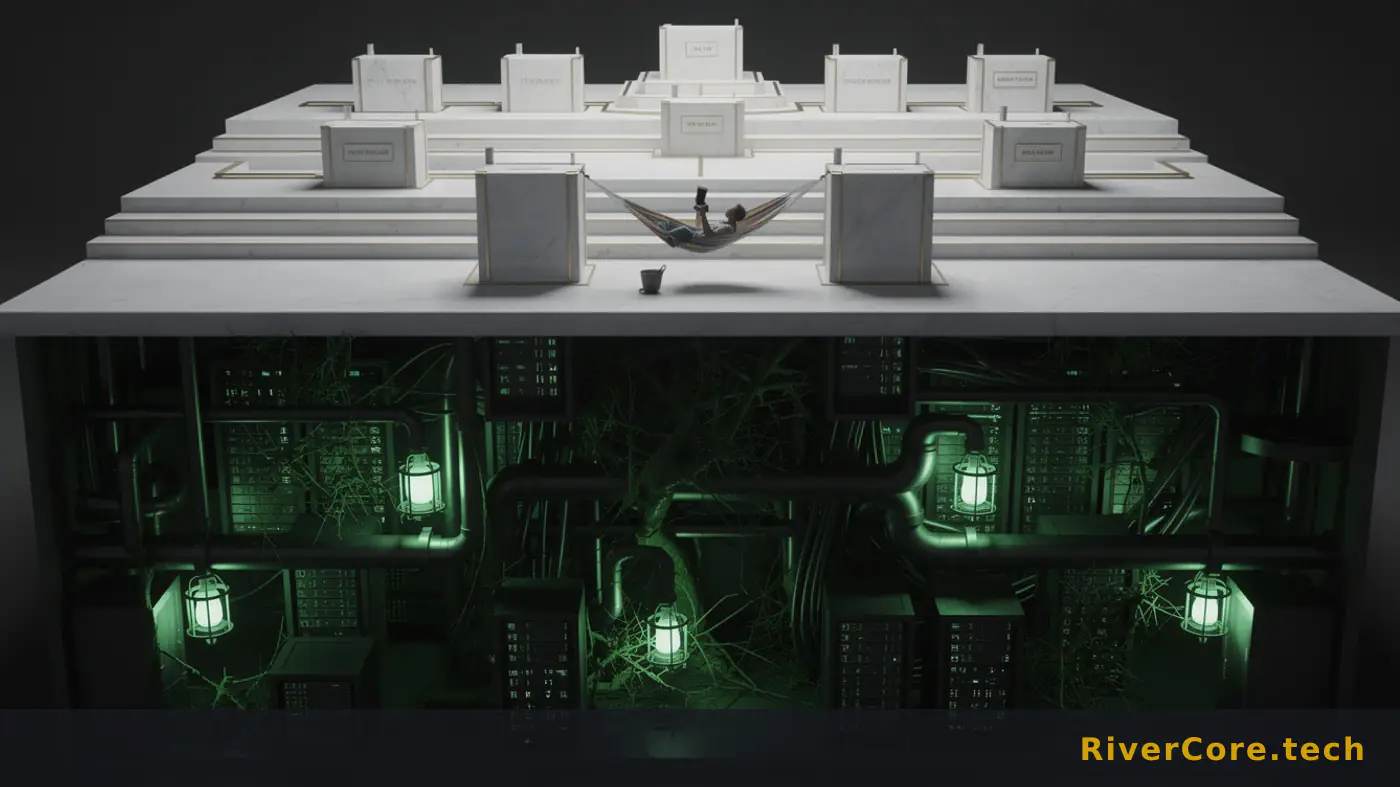
Every pub in Dublin has that one regular who tells you he has a great story, then orders another pint and never gets to the punchline. That's roughly the experience of chasing down a Money Morning piece headlined "Snowflake SNOW AI Growth Engine Earnings Surge September 2026" and finding, on arrival, nothing but the masthead. The glass is on the bar. The story never landed.
So this is going to be an unusual piece. Rather than pretend I have numbers I don't, I want to talk about what the absence itself says, and what senior data folk should actually be watching around Snowflake, AI workloads, and the analytics stack right now. The pint is empty. Let's talk about the pub.
Key Details
Here's the honest version: as Money Morning presented the piece on 4 September 2026, the URL implied a substantive earnings analysis of Snowflake ticker SNOW, framed around AI as the growth engine. The page itself, at the time of writing, contained only the publication's name. No revenue figure. No guidance quote. No product callout. No CFO commentary. Nothing.
That's the entirety of the verified source material. I'm not going to fabricate a beat, a miss, a consumption metric, or a Cortex adoption stat to fill the space. Anyone who has been burned by a badly-sourced earnings note knows why: the moment you invent one number, the whole analysis becomes worthless, and worse, actively dangerous if a reader trades or budgets against it.
What we can say with confidence is contextual, not factual. Snowflake trades under SNOW. It is a cloud data platform. It competes with Databricks, BigQuery, Redshift, and increasingly with the open lakehouse crowd built on Iceberg and Delta. Its consumption pricing model, well documented in the Snowflake docs, means every quarter's revenue is a direct function of how much compute customers actually burned. That structural fact is what makes an AI-workload story so interesting in principle: AI inference and training are compute-hungry in ways that traditional BI dashboards never were.
But "in principle" is doing heavy lifting there. Without the actual reported figures, without segment breakouts, without the guidance range, we're commenting on the shape of the pub, not the story the regular was telling. So the rest of this piece treats the headline as a prompt: if Snowflake did post an AI-driven surge in September 2026, what would data teams need to know, and what should they be doing regardless of whether the quarter was a beat or a bust?
Why This Matters for Data Teams
Here's the guts of it. Snowflake's quarterly numbers are the closest thing the analytics world has to a real-time indicator of how much AI workload is actually landing on managed warehouses versus escaping to somewhere cheaper. Every platform lead I've spoken to in the last eighteen months has run the same rough calculation: is it more expensive to run our vector search and our LLM feature pipelines inside the warehouse, or to lift them out to a dedicated stack?
The answer, boringly, is "it depends on the workload profile", and that's exactly why aggregated vendor revenue is a useful proxy. If Snowflake genuinely posted an AI-driven surge, it tells you that enough customers decided the convenience of governance, lineage, and one-bill simplicity outweighed the raw compute markup. If it didn't, it tells you the opposite: that data teams are increasingly comfortable with polyglot stacks where the warehouse holds the gold tables and something like ClickHouse or a bare Iceberg-on-S3 setup handles the hot analytical path.
Neither answer is universally right. What matters for a CTO reading this is that the decision has stopped being theological and started being financial. The days of picking Snowflake because "it's the safe choice" are ending. Anyone who has watched a quarterly cloud invoice quietly double after enabling a new Cortex-adjacent feature knows the cost of not modelling workload growth before you commit.
The practical implication: your FinOps discipline around consumption warehouses has to be as mature as your dbt project. If you're transforming with dbt and your models are proliferating unchecked, you're effectively writing blank cheques to whichever vendor owns your compute. That's true whether Snowflake had a great quarter or a mediocre one.
Industry Impact
For the verticals RiverCore readers actually work in, the Snowflake-versus-everyone-else question shows up in very different shapes. In iGaming, the workloads are bursty and latency-sensitive: real-time bet grading, fraud scoring, session personalisation. A consumption warehouse can be a poor fit for the hot path but a great fit for the analytics layer that sits behind it. In fintech, regulatory lineage and reproducibility push teams toward platforms that make audit trails cheap, which historically has favoured Snowflake and Databricks over roll-your-own lakehouses.
Ad-tech is the interesting outlier. The economics there have never really tolerated warehouse pricing at query time, which is why so much of the sector runs on ClickHouse, Druid, or Pinot for the serving layer and uses Snowflake or Databricks only for the batch reconciliation and modelling work. If AI workloads genuinely are landing in Snowflake at scale, ad-tech will be one of the last verticals to feel it, because their unit economics were solved for a different problem years ago.
Crypto and DeFi analytics teams sit somewhere in between. On-chain data volumes are enormous but bounded, and the query patterns favour columnar engines that can crunch full-history scans without breaking the bill. The interesting question for those teams isn't "should we use Snowflake" but "can we get warehouse-grade governance on a stack that's mostly Parquet in a bucket". The answer is increasingly yes, which is exactly the competitive pressure Snowflake's earnings will eventually reflect, whether this quarter or a later one.
What to Watch
Since I can't tell you what the September 2026 print actually showed, here's the watchlist I'd hand a platform lead trying to make sense of the next few quarters. First: net revenue retention. That's the single number that tells you whether existing customers are expanding AI workloads inside Snowflake or quietly moving them out. Second: any disclosure around Cortex or native AI feature revenue as a separate line. If it stays bundled, treat it as marketing; if it gets broken out, the company is confident enough to be measured against it.
Third: watch what the hyperscalers do with their own warehouse pricing. If BigQuery or Redshift cuts AI-inference pricing aggressively, Snowflake's margin story gets harder regardless of top-line growth. And fourth, the one nobody talks about: developer sentiment on Iceberg support. The warehouse that wins the next five years is the one that treats open table formats as a first-class citizen rather than a defensive checkbox.
Back to the pub. The regular never finished his story tonight, but that doesn't mean the pub is empty or the questions aren't worth asking. Snowflake's actual September numbers will land somewhere findable eventually, and when they do, run them against the four signals above rather than the headline growth rate. That's how you tell a real AI-driven quarter from a marketing-driven one.
Key Takeaways
- The referenced Money Morning article contained no substantive content at the time of review, so no specific Snowflake financials are cited or should be inferred from this piece.
- Consumption-based warehouse pricing makes AI workload adoption directly visible in vendor revenue, which is why these quarters matter beyond the ticker.
- Verticals differ sharply: iGaming and fintech lean toward managed warehouses for governance, while ad-tech economics still favour dedicated OLAP engines.
- Net revenue retention and Iceberg support are better forward indicators for Snowflake's AI positioning than headline growth rates.
- FinOps discipline on consumption compute is now a first-order engineering concern, not a back-office cleanup task.
Frequently Asked Questions
Q: Why doesn't this article include specific Snowflake earnings numbers?
The referenced source page contained only the publication's masthead and no article body, data, or quotes at the time of writing. Rather than invent figures, this piece treats the headline as a prompt for analysis and clearly signals the absence of underlying data.
Q: Is Snowflake actually benefiting from AI workload growth?
Structurally, its consumption pricing model means any increase in AI compute inside the platform shows up directly in revenue. Whether that's happening at scale in a given quarter requires the actual reported figures, which readers should verify against Snowflake's official investor disclosures.
Q: What should data teams monitor instead of headline earnings?
Net revenue retention, any breakout of native AI feature revenue, competitive pricing moves from BigQuery and Redshift, and the maturity of open table format support (particularly Iceberg). Those four signals tell you more about platform trajectory than any single quarterly beat or miss.